
Demystifying AI: How Can We Assess the True Technological Potential of AI Startups?
Organized by Dynergie (an innovation accelerator) and Matters (a startup studio), this event aimed to clarify the key concepts of artificial intelligence and help entrepreneurs, innovation leaders, and investors better assess the potential of AI projects.
Since the explosion of generative AI with ChatGPT in 2022, this technology has sparked a great deal of excitement, but also a lot of confusion. Clearly distinguishing between AI, machine learning, deep learning, and generative AI remains complex for the uninitiated, while “AI-washing” further blurs the lines. How can you assess the potential of an AI project? How can you ensure its effective use in a business setting? What considerations and precautions should be taken to foster a viable AI project? These are just some of the questions the speakers sought to address during this event.
Key takeaways from the discussion:
The presentations were led by Jihane Bennis, AI Officer at Bouygues Construction and co-organizer of WiMLDS; Antoine Foures, Tech Lead at Matters; and Victor Pacaud, innovation and AI expert at Dynergie.

The event focused on four main themes:
1. A Brief History: Understanding the Evolution and Boom of AI, from Its Origins to Today.
2. Data: a critical yet sensitive driver of viable AI projects.
3. Choosing the right technology: to ensure a high-performance solution over the long term
4. Focus on practical application: repositioning AI as a tool that addresses a critical need for users and businesses.
A Brief History: Understanding the Evolution and Boom of AI, from Its Origins to Today
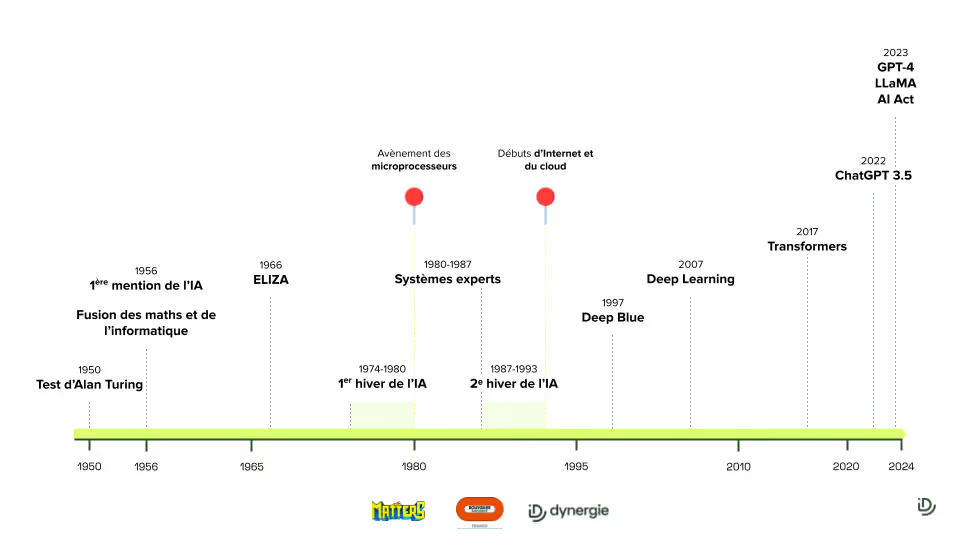
Artificial intelligence (AI) has its roots in the 1950s, with figures such as Turing, McCarthy, and Minsky, paving the way for the convergence of mathematics and computer programming. One of the first milestones of this era was ELIZA, a program developed in 1966 at MIT that simulated human conversation, thereby laying the groundwork for natural language processing. This period was marked by initial enthusiasm, followed by the first “AI winter,” a phase of disillusionment due to the technological limitations of the time.
The microprocessor revolution of the 1980s reignited interest in AI, although a second “winter” set in by the end of the decade. Nevertheless, significant advances were made, notably with IBM’s Deep Blue, which defeated world chess champion Garry Kasparov in 1997. This period saw the emergence of machine learning and the first steps toward deep learning, paving the way for more sophisticated models.
Today, AI is accessible to everyone, thanks to generative AI, deep learning, and transformer models such as GPT-4. This "iPhone effect" has democratized AI, making it ubiquitous in our daily lives. This boom rests on three essential pillars: data, technology, and usage.
Data: A critical but sensitive driver of viable AI projects
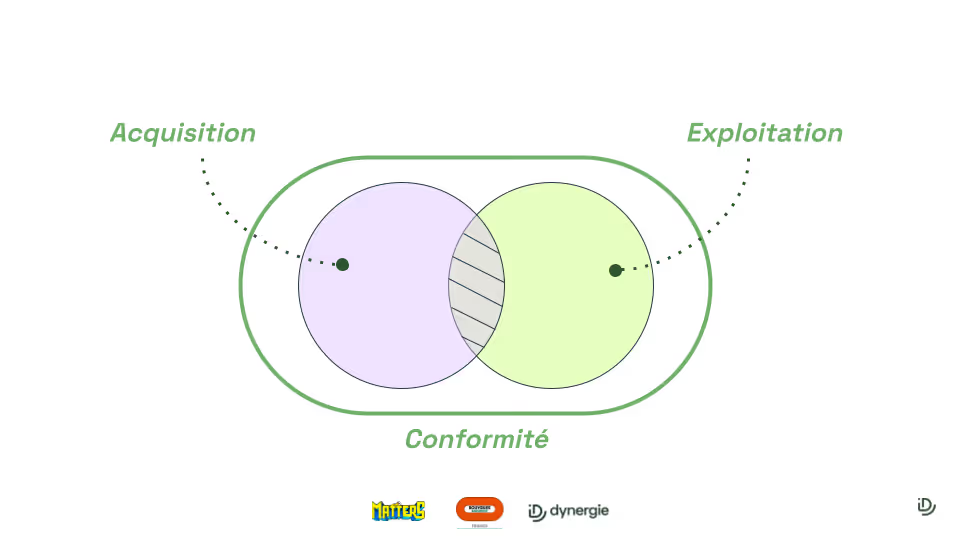
Data is the essential fuel for AI. Its quality, acquisition, and accessibility determine the viability of a project. It is crucial to implement an effective data collection and processing strategy to ensure its relevance and reliability, thereby guaranteeing sound and effective learning. The accessibility of data—whether public or private—also influences a company’s ability to integrate into a given ecosystem.
The use of this data also raises significant security and intellectual property issues. Secure data storage is essential to prevent data breaches and cyberattacks. Furthermore, the use of user data to train models must respect intellectual property rights, requiring that any co-development partnerships be formalized as soon as possible. Regulations such as the GDPR, the AI Act, and CNIL guidelines impose strict frameworks to ensure compliance and protect the rights of individuals in Europe, in contrast to more flexible approaches elsewhere in the world.
Choosing the right technology: to ensure a high-performance solution over the long term
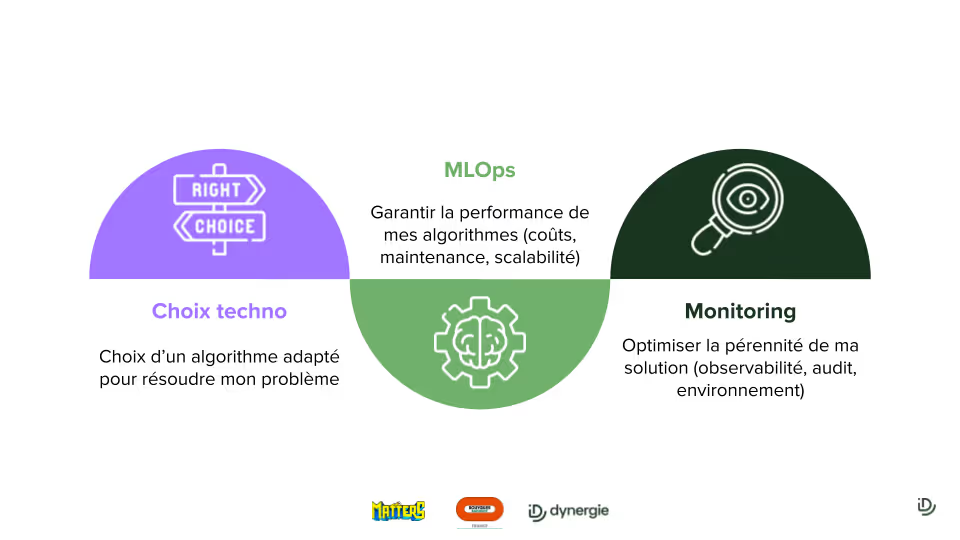
Selecting the right technology is essential for the performance and sustainability of an AI solution. Different types of algorithms are suited to specific problems, whether for training or inference tasks. It is therefore vital to align the choice of technology with the project’s objectives and needs.
In addition, implementing MLOps (Machine Learning Operations) practices is essential for effectively managing the costs, evolution, and maintenance of algorithms. This includes scaling models, forecasting costs based on usage, and continuously monitoring performance to prevent model drift.
Finally, adopting a product vision centered on integration and transparency is also crucial. System observability enables audits, ensures compliance with regulatory standards, and allows for the rapid detection of anomalies. Furthermore, the environmental impact of AI can no longer be overlooked. We encourage companies to ultimately choose technology that enables the development of sustainable solutions, tailoring its capabilities to the required functionalities. By taking into account the energy consumption and carbon footprint of models, a more frugal and virtuous approach could resolve the current contradiction between the exponential use of AI and its significant carbon impact.
User-Centric Approach: Reimagining AI as a Tool That Meets the Critical Needs of Users and Businesses
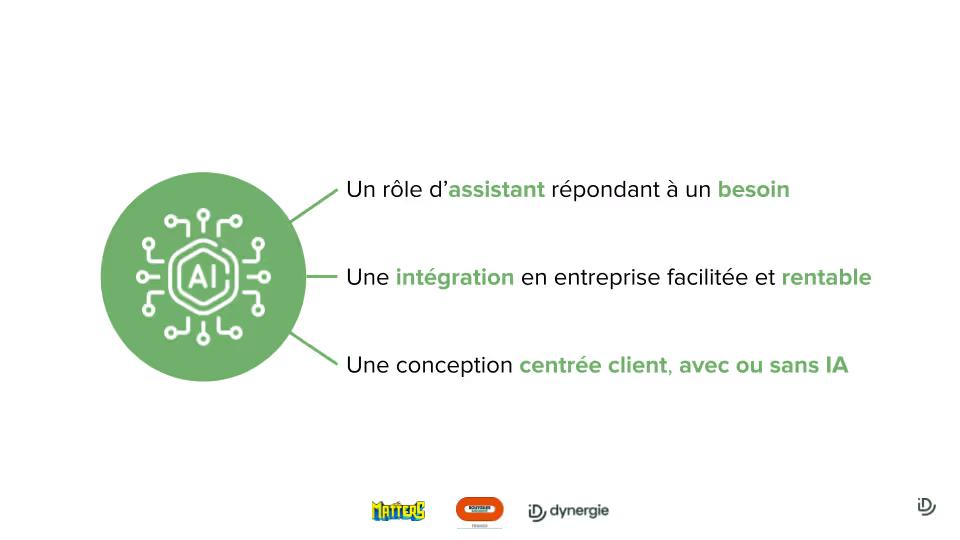
Let’s start with the most important thing: the use case. AI should be viewed as a tool that addresses a real need, whether that means solving an existing problem or seizing an opportunity for improvement. Rather than seeking to replace humans, AI should be positioned from the very outset of a solution’s design as an assistant, enhancing users’ capabilities while preserving human value.
From a product design perspective, it is therefore essential to adopt a customer-centric approach. AI should be viewed as a means to enhance the product or service, not as an end in itself. This means ensuring that AI addresses an identified need, thereby avoiding the trap of “AI-washing,” where AI is presented as a mere marketing gimmick with no real utility, taking advantage of the general lack of clarity surrounding the term “AI.”
For businesses, its implementation requires a thoughtful approach. The "3U" rule (Useful, Usable, Used) underscores the importance of creating solutions that deliver real value, are easy to adopt, and integrate seamlessly into existing processes. Focusing on return on investment (ROI) from the outset ensures greater buy-in from stakeholders.
By putting the user experience at the center, companies can develop AI solutions that are not only innovative but also relevant and effective, thereby driving user adoption and creating lasting value.
Conclusion
Developing and deploying AI effectively requires a deep understanding of the technologies involved, rigorous data management, and a user-centric approach. Numerous regulatory challenges further complicate this task, requiring a high degree of vigilance. As a result, there are many recommendations and best practices to consider in order to make AI a powerful tool—one that is integrated and used in a thoughtful, responsible manner, with a focus on delivering real-world impact for its users.
Related articles

Camille Duru
