
How to respond to a call for proposals in 2025?
Whether you’re a startup, a large company, a nonprofit, a university, or another research organization, understanding what a call for proposals is, how it works, and how to respond to it can be the key to your success. This article provides you with everything you need to understand the basics of this type of initiative.
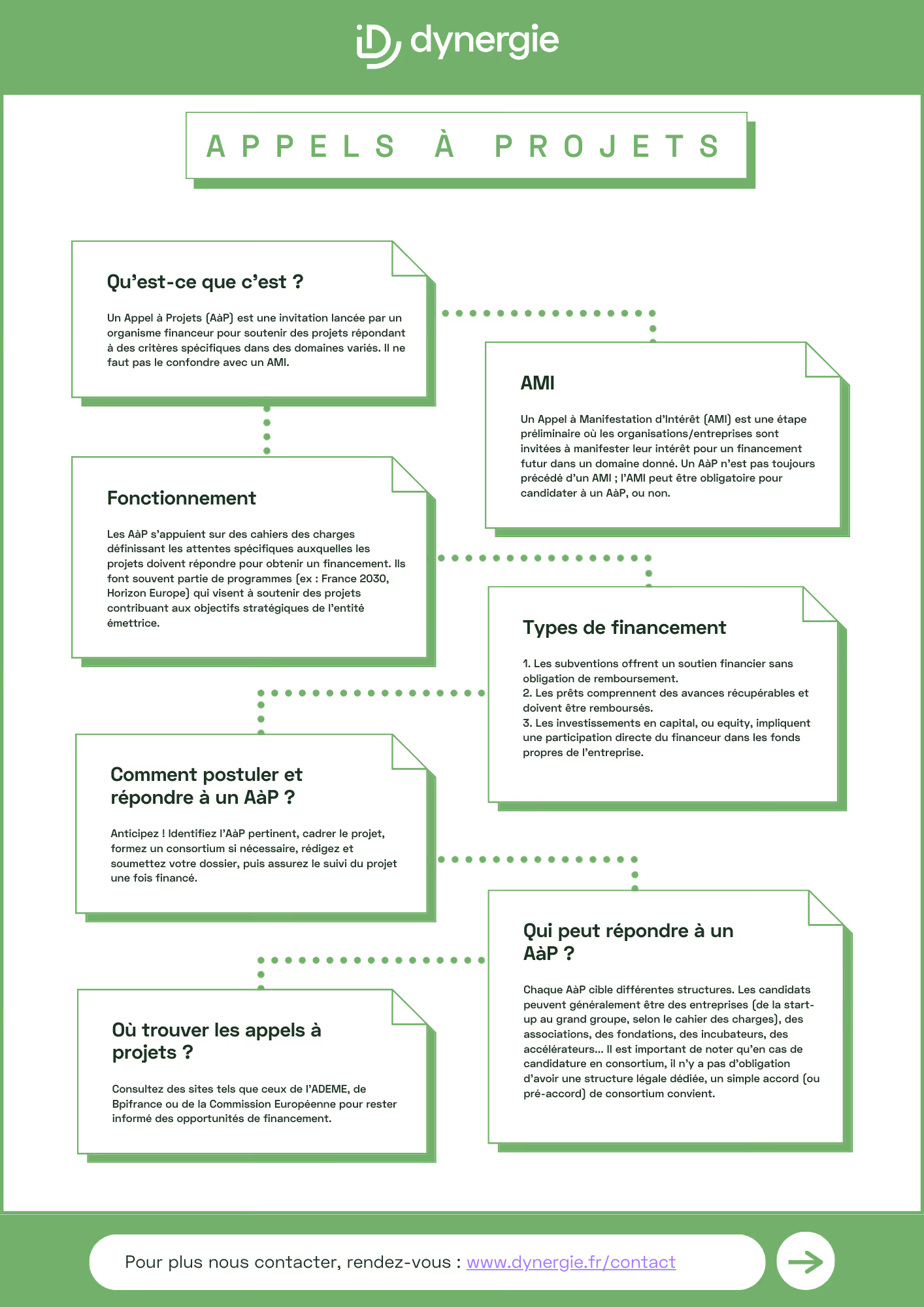
To help you identify funding opportunities for which you may be eligible, we’ve developed a tool that lets you find all available grants for your innovative business in just 8 clicks.
What is a call for proposals (CFP)?
A call for proposals (CFP) is an invitation issued by a government, an institution, or another organization to fund projects that meet specific criteria, as outlined in a set of specifications detailing the specific requirements for the projects. These CFPs may cover a variety of fields, such as scientific research, technological development, culture, education, the environment, and so on.
How does an AàP work?
These calls for proposals are often part of a funding program, which is an initiative developed by a government or a specific entity—such as the European Commission—with the aim of mobilizing financial or human resources to support projects that contribute to achieving the strategic objectives of that entity, which is often political in nature.
For some calls for proposals, responses may or must be submitted jointly by multiple organizations. If this is the case, the project is considered a collaborative effort, and the responding partners must form a consortium, which may include private companies of any size, public institutions or laboratories, associations, and so on.
When a company, association, or organization is selected for funding, it receives the funding in the form of grants, loans, or equity.
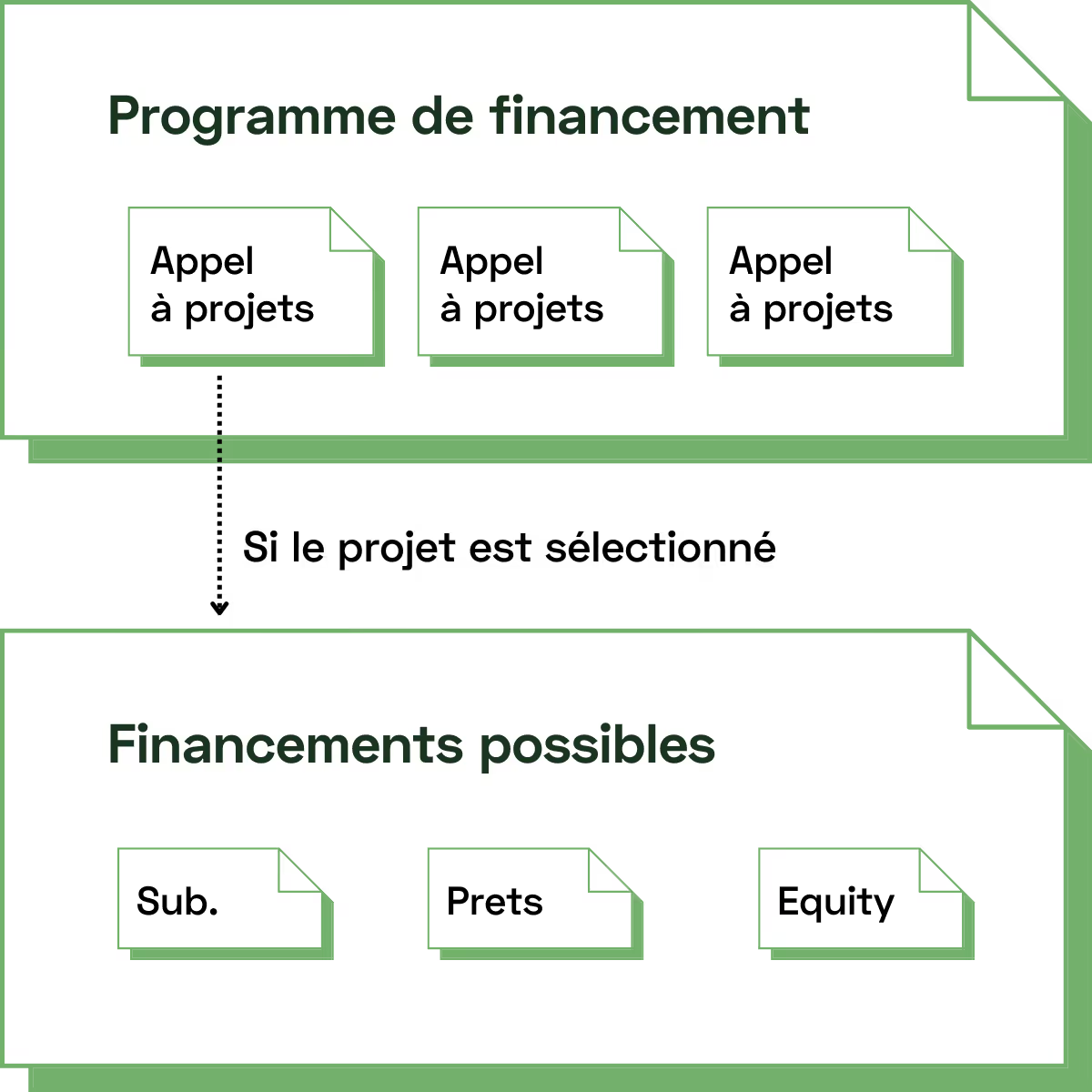
Types of financial assistance: grants, loans, equity
1. Grants provide financial support that does not need to be repaid.
2. Loans include recoverable advances that must be repaid.
3. Equity investments involve a direct stake by the entity or the investors participating in the call for proposals in the company’s equity.
Please note that grants are subject to performance requirements; failure to meet these requirements may result in the grant having to be repaid or only a portion of it being disbursed.
RFP or RFI (Request for Information)?
Unlike a call for proposals, a call for expressions of interest is a preliminary step (usually without dedicated funding) in which organizations and companies are invited to express their interest in future funding in a given field. This may involve providing basic information about their expertise, resources, and interest in the project. Participants may then be shortlisted based on this expression of interest to move on to the next phase, which may take the form of a call for proposals as typically understood.
Who will be eligible to apply for a teaching position in 2025?
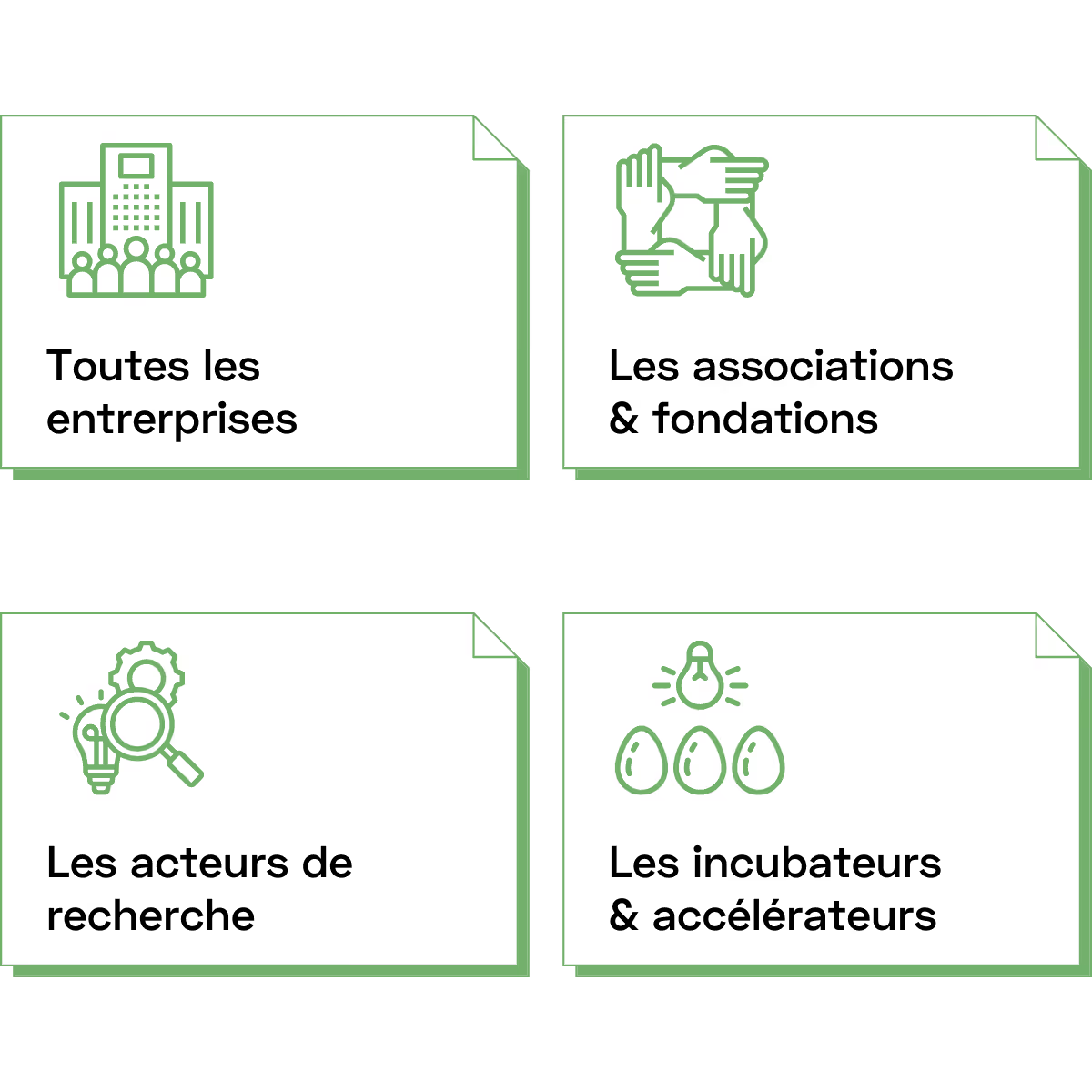
Companies, from startups to large corporations
All companies—whether startups, small and medium-sized businesses, or large corporations—can apply for grants based on their areas of expertise and their ability to achieve the defined objectives.
Nonprofits & Foundations
Nonprofit organizations and foundations that carry out activities related to the themes addressed in a call for proposals are generally eligible to apply. In particular, they may propose social, cultural, or environmental initiatives. They typically benefit from very favorable funding terms.
Incubators & Accelerators
Incubators and accelerators, which typically support the development of startups and emerging companies, can respond to calls for proposals by submitting their members’ projects or by proposing collective initiatives.
Research stakeholders
Other entities, such as research institutions, universities, laboratories, research centers, etc., may also respond to calls for proposals, particularly as part of a consortium. There are calls for proposals specifically designed for them.
How do I apply and respond to a call for proposals?
Responding to a call for proposals requires a significant investment of time and effort from the organization wishing to apply, but the strategic benefits of structuring the project and striving for excellence—even if funding is not awarded—are undeniable. However, there are a few best practices, tips, and steps to keep in mind and not overlook when responding to a call for proposals in order to increase your chances of receiving funding.
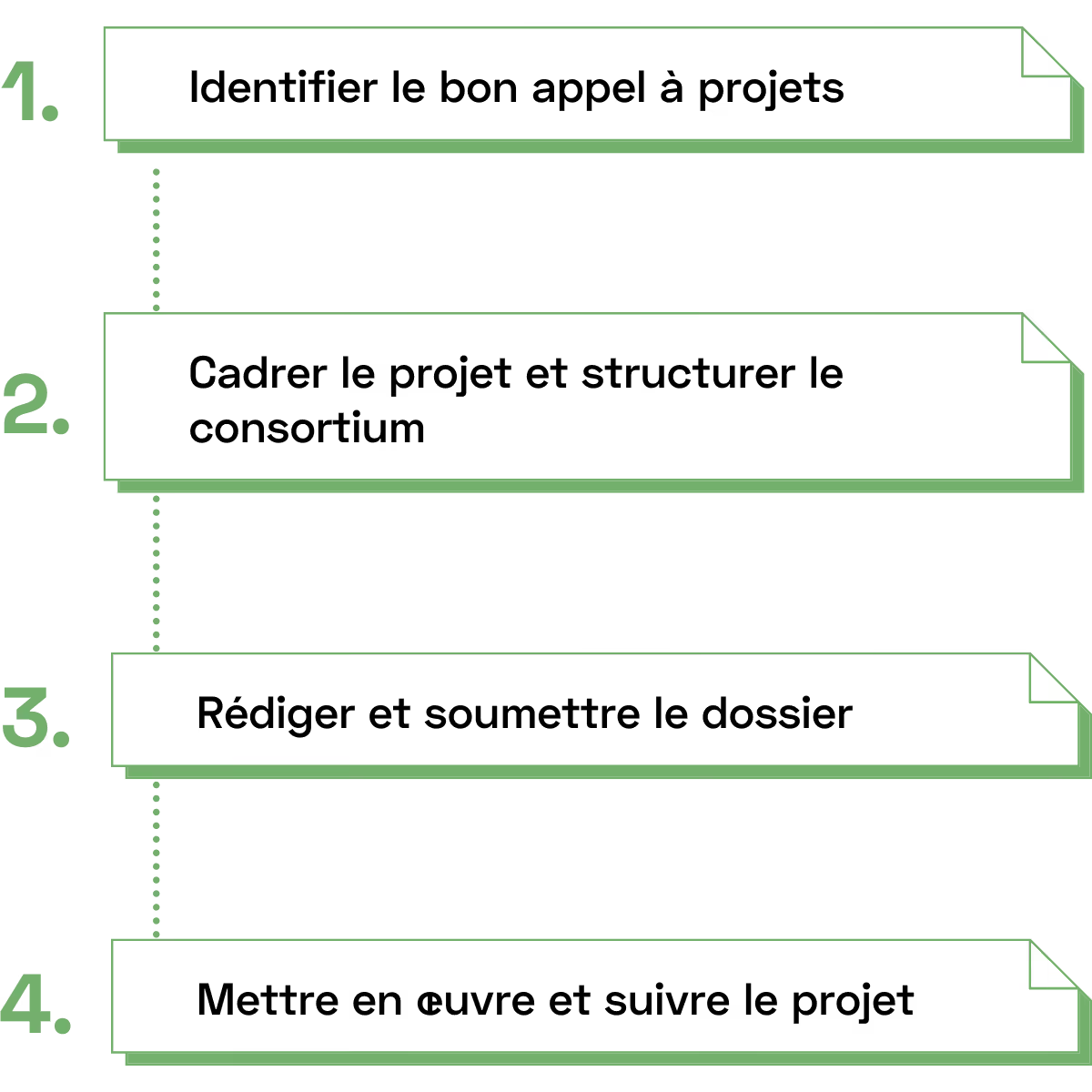
1. Identify the right call for proposals
The goal is to stay informed about current and upcoming funding opportunities in your industry. There are several platforms available for tracking these calls for proposals, such as institutional websites and industry newsletters.
To identify opportunities offered by funding programs such as France 2030 and Horizon Europe, a proactive approach is necessary. Anticipation is key.
Once you have identified a relevant call for proposals, it is important to ensure that your company and your project align with the targeted themes, the call’s objectives, and the eligibility criteria. It is also necessary to familiarize yourself with the funding terms to verify that they are compatible with your needs.
2. Define the scope of the project and establish the consortium
After identifying the RFP that corresponds to the company’s project, the first step is to clearly define the project’s objectives, activities, and expected outcomes in accordance with the requirements outlined in the RFP.
In a collaborative project, this first step takes place at the same time as the consortium is formed: the project leader identifies and brings together the relevant private and/or public partners to carry out the project. The complementary nature of the skills and resources each partner brings to the project is key to creating a consortium capable of making the project a success.
3. Prepare and submit the application
Writing a compelling proposal is essential when responding to a call for proposals. Indeed, it is in this proposal that all aspects of the project must be supported by a solid case, demonstrating the project’s impact and its alignment with the call for proposals.
Putting together an application can be tedious and time-consuming for a project leader.
First, you will need to familiarize yourself with the requirements of the call for proposals: the administrative, technical, and financial documents required for submitting the application. Next, you will need to draft the proposal following a detailed outline that includes numerous elements such as a technical overview of the project and the company, the objectives and challenges, a description of the planned activities, a detailed budget, and so on.
Beware of the deadline trap: the project submission process does not allow for "rough estimates." You must ensure from the outset that you can meet the submission deadlines and provide all requested documents in the required format.
4. Implement and monitor the project
Once your project has been selected for funding, implementation begins, and an effective management and monitoring structure must be established to ensure its successful execution.
Funding agencies also require progress reports to monitor results and adjust actions as needed.
The France 2030 Funding Program
France 2030 is a major investment plan unveiled by French President Emmanuel Macron in 2022. With a budget of 54 billion euros, this plan aims to propel France forward ininnovation andindustrialization, in order to close its industrial gap by investing heavily in innovative technologies, while supporting the ecological transition, as with the "Première Usine" call for proposals, for example.
Where can I find calls for proposals?
Calls for proposals are announced on the websites of the organizations that issue them. For example, you can find some of them on the following websites:
> ADEME
> Our tool for identifying grants for innovative companies
To view our support services, click here.
Useful link: Businesses: How to Get EU Funding?
Related articles

Hugo Charbonnier

For the past 10 years, I have been supporting and advising innovative companies on the strategic and financial development of their innovations: identifying areas for growth, helping to develop business plans, assisting with financial projections, determining the best financing strategy, and preparing financing applications (CIR, CII, JEI, Bpifrance, Digital Innovation Competition, PIA, etc.). My technical expertise in diverse fields such as e-learning, Artificial Intelligence, Cybersecurity, Big Data, Natural Language Processing, etc., is essential for effectively highlighting the innovative nature of projects to funding organizations.