
Discover how remote work fosters innovation
What if remote work could boost innovation? Beyond productivity, remote work is emerging as a key driver for stimulating creativity, attracting a diverse talent pool, and reinventing ways of collaborating. Flexibility and innovation are now one and the same.
Flexibility and Creativity: How Remote Work Drives Innovation in the Workplace
Since the 2020 health crisis, remote work has evolved from being merely a way of organizing work to becoming a true strategic asset.
While early discussions focused primarily on productivity and employee well-being, another aspect has now become a key concern for agile companies: the ability of remote work to foster innovation.
At a time when organizational models are being reimagined, a crucial question arises: what if the flexibility brought about by remote work were one of the key catalysts for collective creativity and sustainable innovation?
Organizational flexibility: a response to today's challenges
Flexibility is not a luxury, but a necessity in a world marked by uncertainty, rapid technological change, and economic upheaval.
By paving the way for new work rhythms, spaces, and modes of collaboration, remote work is becoming an essential component of this organizational flexibility.
According to a study bythe Observatory on the Transformation of Work, 72% of employees believe that hybrid work helps them concentrate better and allows them to be more creative.
From a managerial perspective, this paves the way for a redefinition of innovation cycles: shorter, more adaptable, and better aligned with employees' aspirations.
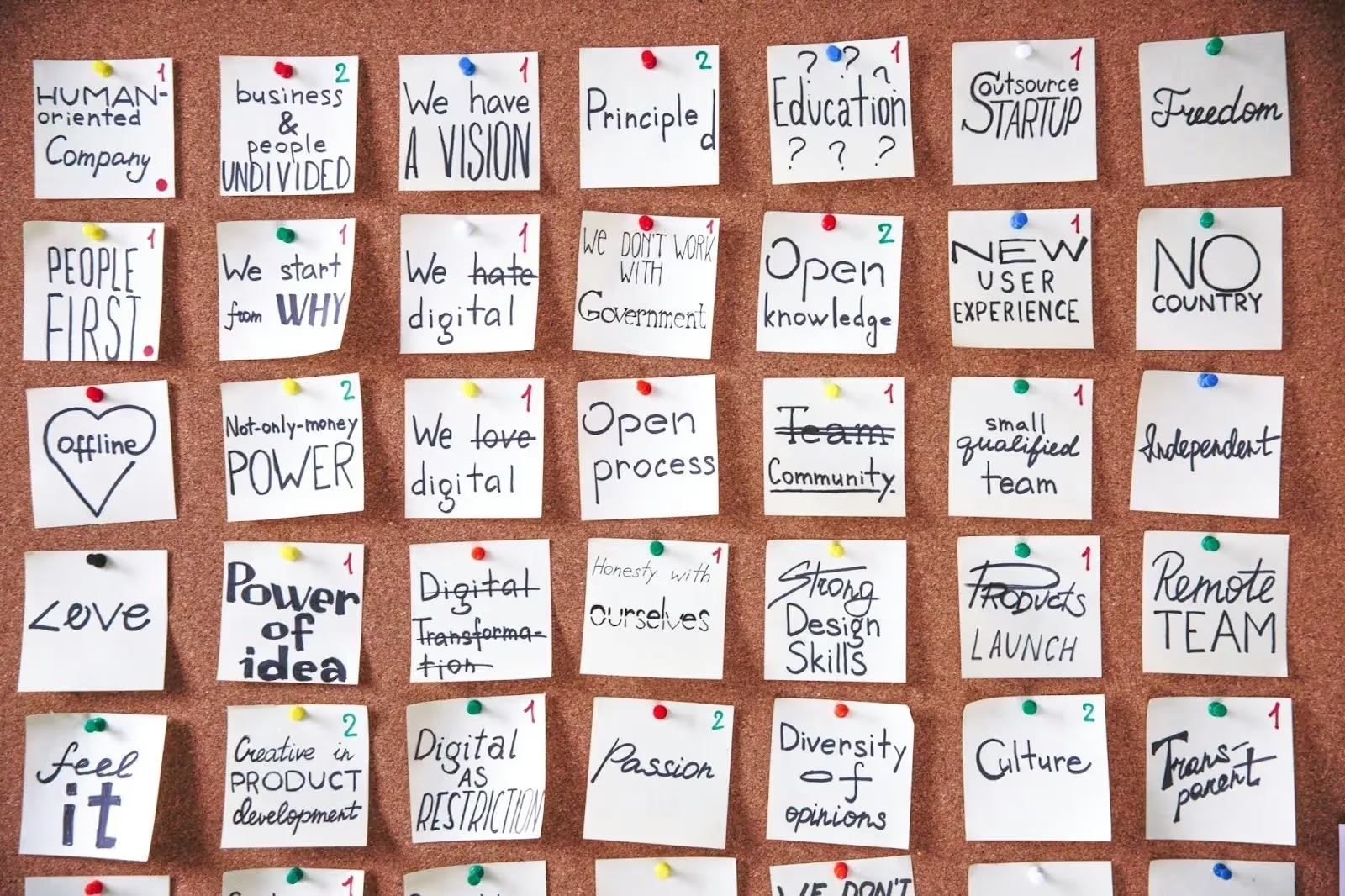
Remote work: A catalyst for individual and collective innovation
Contrary to popular belief, distance does not hinder collective intelligence—quite the opposite. By giving employees the opportunity to work in environments of their choosing—quieter and more personalized spaces—remote work fosters divergent thinking, an essential skill in any creative process.
In addition, digital collaboration tools (such as Miro, Notion, Klaxoon, and Slack) have given rise to new practices for online ideation and prototyping. Remote design thinking, once a niche practice, is now becoming the standard in innovation teams.
Real-world example: a hybrid approach to innovation
Let’s take the example of an industrial SME that has embarked on an agile transformation with the support of an innovation consulting firm. By implementing two days of remote work per week for its R&D and marketing teams, the company saw a 35% increase in the number of internal innovation proposals submitted over a six-month period.
How can this trend be explained?
Greater team autonomy, combined with redesigned collective intelligence rituals (virtual stand-up meetings, asynchronous project reviews, and gamified online brainstorming sessions), has freed up time and cognitive bandwidth for innovation.
Geographical diversity: a driver of greater creativity
Remote work also broadens the scope of possibilities when it comes to recruitment. It makes it possible to attract talent with diverse backgrounds, regardless of their geographic location. This geographic diversity becomes a source of richness, enriching projects with a variety of perspectives, many of which are novel.
Platforms like Jooble now make it easier to recruit candidates who work entirely remotely, allowing companiesto access hard-to-find skills without geographical constraints. This expanded accessto talent pools is a major advantage for organizations committed to innovation.
What safeguards are needed to preserve collective intelligence when working remotely?
However, for remote work to truly foster innovation, certain conditions must be met:
- Well-defined synchronization rituals to maintain team cohesion and prevent silos.
- A culture of open feedback that encourages the expression of new ideas without judgment.
- Management based on trust rather than control, to make room for experimentation and initiative.
Innovation can only flourish if employees feel empowered to experiment, make mistakes, and come up with new ideas. This requires a supportive yet demanding management style and a corporate culture focused on continuous learning.
Toward a New Model of the Learning and Distributed Organization
The innovative company of tomorrow will be decentralized, adaptive, and connected by purpose rather than by location. It will combine the best of both worlds: the synergy of in-person collaboration and the focus and perspective that remote work provides.
Innovation no longer originates solely within the walls of a corporate headquarters; it spreads to trade shows, coworking spaces, cafés, natural settings… anywhere employees can find inspiration. This new approach to work is redefining the relationship between the individual and the organization.
Conclusion: Making Flexibility a Strategic Asset
More than just a way of working, remote work is now a driver of cultural transformation. By embracing flexibility, companies are empowering themselves to unlock their teams’ creative potential, attract unconventional talent, and rethink their innovation cycles.
But this flexibility can only yield lasting results if it is viewed as a strategic investment, rather than merely a short-term response. It is by adopting this approach that organizations will become not only more resilient, but also more innovative—and thus more competitive in the long run.
Related articles

Nicolas Hily

After spending two years as an innovation consultant specializing in the implementation of strategies for bringing innovative solutions to market, I am now dedicated to driving Dynergie’s growth as the marketing and growth manager. Throughout my career, I have had the opportunity to experiment with numerous methods and principles drawn from real-world experience, my clients, my colleagues, and various sources of information. Today, I’m delighted to have the opportunity to share this expertise with you. I hope to share my vision of innovation and marketing through these various posts.