
Impact Model: Identifying the Best Innovation Opportunities
The Impact Model aims to systematically identify the best opportunity before developing and refining the idea to bring that opportunity to fruition. This article explores the fundamental principles of the Impact Model and illustrates how it works through a concrete example.
This article is a simplified version of the scientific paper by Sébastien Deschaux and Léa Bunnens, "Design by Impact: a convergent approach to innovation conception," to be published shortly.
The Importance of Identifying the Right Opportunity
The Impact Model aims to systematically identify the best opportunity before developing and refining the idea to bring that opportunity to fruition. This article explores the fundamental principles of the Impact Model and illustrates how it works through a concrete example.
The main barriers to innovation performance are linked to the selection and execution of innovative ideas (BCG study, 2015). However, even with flawless execution, the quality of the initial idea remains a crucial predictor of innovation success (Felin et al., 2020). And since the quality of an idea depends directly on the quality of the opportunity it addresses (Reiter-Palmon, 2009; Wigert et al., 2022), the first step is therefore to identify the right opportunity to pursue. However, opportunity identification suffers from a severe lack of attention, both in research and in creativity methods (Abdulla et al., 2020; Reiter-Palmon, 2018).
As such, the Dynergie R&D lab has developed a method called the Impact Model that enables the systematic identification of the best opportunity, followed by the generation and optimization of the idea needed to bring it to fruition. The Impact Model aims to maximize impact—that is, the difference the new solution makes for its entire ecosystem compared to alternatives. We’d like to explain how this method works, using an example.
Fundamentals of the Impact Model
We define an idea’s potential impact as its ability to make a difference compared to the initial situation or its alternatives, for all stakeholders involved, whether directly or indirectly. This difference encompasses economic, environmental, and societal aspects, but more broadly includes aspects such as comfort, safety, social belonging, time, etc. By creating a positive difference for users, we create perceived value that can then be capitalized on by the innovative company.
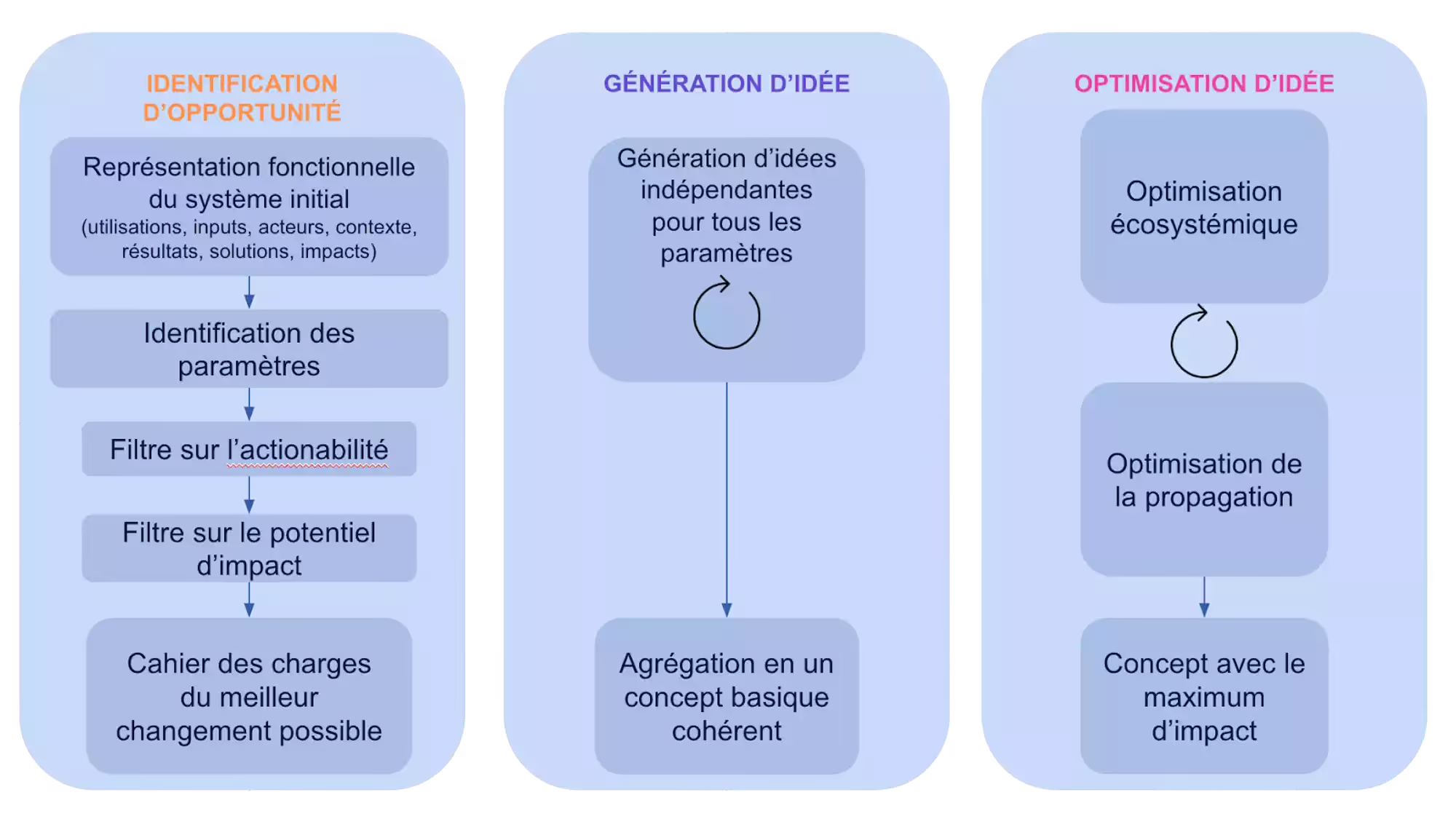
When looking for the best opportunity, we aim to create the greatest possible positive impact and move as close as possible to what would be considered an ideal situation for all parties involved. To do this, we follow three steps:
1. Identifyingopportunities: analyze the situation and identify the factors with the greatest potential for impact
2.Idea generation: first for each parameter, then by combining them into an overall concept
3.Idea optimization: Maximize the concept’s impact on all stakeholders in the ecosystem and accelerate its adoption.
The steps, which we will describe in detail, are outlined below:
We will now use an example to illustrate how the method works. The company, which we will call CleanServ for confidentiality reasons, provides cleaning and maintenance services for offices.
Step 1: Identify the best opportunity

Describe the initial situation
The first step is to describe the initial situation and its effects on the stakeholders involved, as well as the factors influencing those effects (what determines the effects on users?)
Application to our illustrative example:
The system under consideration here is office spaces, which are affected by CleanServ’s services in two ways: their level of cleanliness (through cleaning services) and their operational performance (through maintenance services).
The two groups directly affected are office workers and CleanServ’s cleaning and maintenance staff.
To indicate the relevant uses, we use the following notation: user (system used) → result/effect
So here we have office workers → work and office cleaning staff → work
Note that all interactions are reciprocal; in other words, the actors will also have an effect on the system. Here:
- offices (employees) → damage (to cleanliness or equipment)
- Offices (cleaning staff) → cleanliness and operational functionality
We can also identify the interactions among the actors:
- worker (cleaning staff) → recognition of the work performed by staff in office settings
- and cleaning staff (workers) → recognition of their value, if expressed by the worker.
Identify the parameters of interest
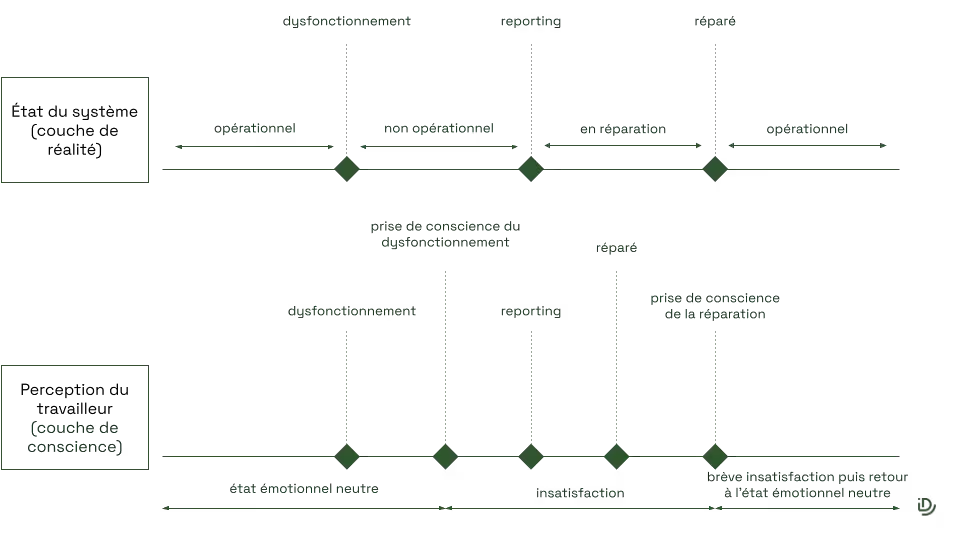
To identify the best opportunity, we need to map out the actual and perceived impacts of CleanServ’s operations and the parameters of those impacts. Since actual impacts are not always the same as perceived impacts, we need to map out both simultaneously. We therefore use what we call the Thing Journey, inspired by the User Journey used in design thinking. The Thing Journey maps out the different states of the system and the users, in two layers:
- the reality layer that presents changes as they occur. The reality layer is therefore unique.
- the layer of consciousness that presents changes as they are perceived. There are therefore as many layers of consciousness as there are users.
The perceived benefits can take many forms: saving time, saving money, but also peace of mind, comfort, pride, a sense of belonging, and more. We have compiled a list of over 150 benefits based on research in psychology, neuroscience, and marketing, among other fields.
Once the Thing Journey has been established, we can then identify the parameters on which these contributions depend.
Partial application to our example: Maintenance activity (see the diagram below)
For workers, the impact is mostly negative; people only think of the maintenance provider when something goes wrong.
Dissatisfaction depends on:
- the duration of the malfunction, from the onset of the malfunction until it is reported, plus the time from reporting to actual repairs. Ideally, this duration would be zero. In the current situation, it is generally about 4 weeks, including 3 weeks for reporting
- how often the malfunctioning equipment is used (a malfunctioning coffee machine or photocopier will cause more dissatisfaction than the patio umbrellas in the middle of December).
Filter the parameters to identify those with the greatest potential
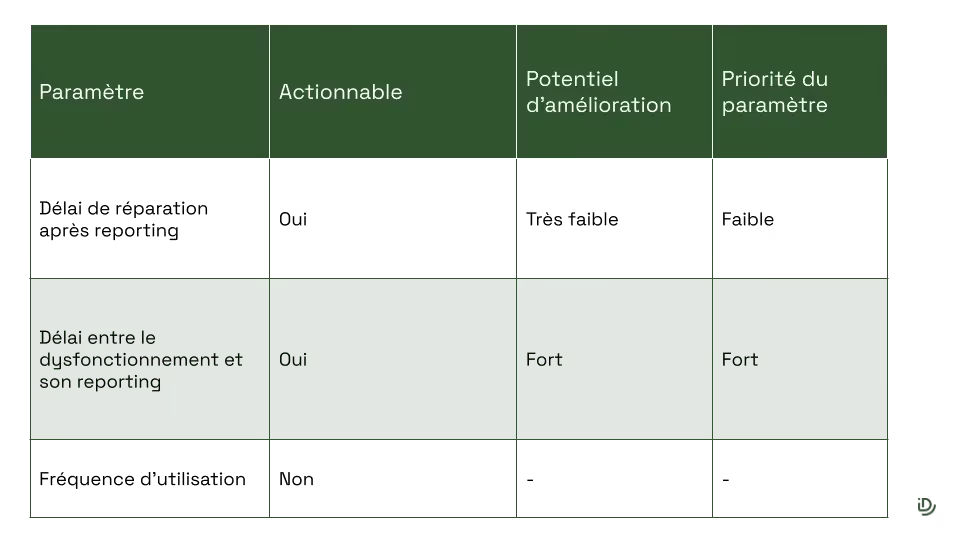
Now that we have identified our parameters, we need to filter them to select those with the greatest potential for impact. We use two criteria for filtering:
- Is the parameter actionable? In other words, is it reasonable to assume that the company’s design of an innovation will allow for action to be taken on it? This generally excludes cultural parameters or those that depend heavily on individual personalities.
- What is the potential for improvement in this area? An area that has already been largely optimized will likely require a great deal of effort for only minimal improvement.
The prioritized parameters form the specifications for the opportunity with the greatest potential, which will then be developed into a concrete concept.
Application to our example: Maintenance activity
- Repair times are a key performance metric. The time it takes for a service provider to respond after a report is filed has already been significantly optimized across the industry. However, there is definite room for improvement in the time it takes to file a report.
- The frequency of use depends largely on the context, so it is difficult to imagine a solution that would guarantee an improvement in this area.
We can therefore conclude that the priority is to explore ways to shorten the reporting timeline.
Final specifications (based on all analyses, not all of which are shown in this example):
- Raise awareness on a regular basis of the work done by the cleaning staff on the premises. Ideally, this awareness should be maintained at all times.
- Enable people to express their appreciation for cleaning staff at their convenience. Ideally, this should be possible anytime, anywhere.
- Enable quick and easy reporting. Ideally, it should be possible to report a malfunction anywhere, anytime, instantly.
Step 2: Come up with an idea

Generate ideas for each parameter
Now that we have a set of specifications, we must strive to ensure that the solutions we develop align as closely as possible with them.
Innovations are rarely new in an absolute sense, but are rather “local innovations”: new to the environment in which they are introduced, but adapted from solutions and knowledge that already exist elsewhere (Guellec, 1999; Perez-Luno et al., 2007). As a result, it is entirely possible—and even beneficial—to draw inspiration from known solutions as a starting point for our ideation. Furthermore, by generating ideas independently for each parameter of the specifications, we reduce complexity and broaden the range of possibilities.
The generated solutions are then evaluated based on the cost of improving the parameter in question.
Application to our example
We developed solutions—inspired by everyday or existing solutions—for each parameter. (See the table below.)
Integrate the solutions into a cohesive whole
The goal here is to integrate these independent solutions into a coherent, comprehensive concept.
Application to our example:
Based on our independent solutions, the concept that emerged was:
- a digital system prominently displayed in several locations throughout the offices, particularly in common areas
- which serves as a visual reminder to employees that their workspace is clean and functional thanks to the efforts of the service provider and its staff (by displaying the names and photos of the cleaning staff)
- used to report any malfunctions on the premises
- allowing you to leave a digital thank-you message for the cleaning staff for repairs or cleaning
Step 3: Ecosystem and propagation optimization—Global Reciprocal Design (GRD)

The basic concept presented in the previous step was developed to maximize its impact on the stakeholders directly involved. Global Reciprocal Design (or GRD) aims to optimize the concept’s overall impact by taking into account all stakeholders in the ecosystem over time. It includes optimizing the concept’s capacity for organic dissemination, which is intrinsically linked to its impact: the greater the solution’s impact on its users, the more willing they will be to talk about it or use it in a visible way; and the more the solution is disseminated, the more opportunities it will have to create an impact.
Application to our example
The concept has the following impacts on ecosystem stakeholders:
- For managers, the system can be incorporated into a broader workplace wellness initiative
- For the person responsible for compiling reports of system malfunctions, the system saves a considerable amount of time. We could also foster a sense of pride and recognition by making their contributions visible to everyone.
- For the person in charge of the client account at CleanServ, the concept also saves a significant amount of time
- To encourage the use and adoption of the system, the feedback and thank-you message can be delivered verbally. By making the action audible, we foster a sense of pride and a feeling that the employee is setting an example, thereby encouraging the action itself.
- For CleanServ, this creates an opportunity to expand into new business areas if the system is set up to collect requests for additional services from workers (such as dry cleaning, watering plants, etc.).
- As it stands, the concept already gives CleanServ a significant competitive edge in a highly competitive industry and paves the way for new service offerings and even new business models (such as pay-per-use)
Conclusion: Why the Impact Model Is a Game-Changer
The Impact Model offers several advantages over traditional creativity methods:
- It focuses on the potential of the opportunity rather than diving blindly into the ideation process, thereby maximizing the potential of the resulting concept.
- It is convergent, enabling significant savings in time and resources compared to traditional methods, without compromising the creativity of the solutions generated
- It allows you to justify each decision and trace the line of reasoning that leads to the development of the innovative concept.
In a highly competitive world with limited resources, the Impact Model helps focus resources where the greatest potential lies, in order to create innovative solutions that will make a real difference to their ecosystem. The method also enables the creation of innovations focused on environmental or social impact by incorporating this constraint directly into the analysis and selection of relevant factors.
Bibliographic sources
Abdulla, A. M., Paek, S. H., Cramond, B., and Runco, M. A. (2020), “Problem finding and creativity: A meta-analytic review,” *Psychology of Aesthetics, Creativity, and the Arts*, vol. 14, no. 1, pp. 3.
Felin, T., Gambardella, A., Stern, S., & Zenger, T. (2020), “Lean Startup and the Business Model: Experimentation Revisited,” Long Range Planning, Vol. 53, No. 4, 101889.
Reiter-Palmon, R. (2009), “A dialectical perspective on problem identification and construction,” Industrial and Organizational Psychology, Vol. 2, No. 3, pp. 349–352.
Reiter-Palmon, R. (2018), “Creative cognition at the individual and team levels: What happens before and after idea generation,” in Sternberg, R. J. & Kaufman, J. C. (Eds.), The Nature of Human Creativity, Cambridge University Press, pp. 184–202.
Wigert, B. G., Murugavel, V. R., and Reiter-Palmon, R. (2022), “The utility of divergent and convergent thinking in the problem-construction processes during creative problem-solving,” *Psychology of Aesthetics, Creativity, and the Arts*, Advance online publication
Related articles

Lea Bunnens

With one foot in research and the other in innovation projects, Léa’s main mission is to foster greater dialogue between these two worlds. On a daily basis, the projects she helps bring to life enable her to develop new methods and tools designed to increase the chances of success for future projects. Her specialty: identifying the right opportunity, developing the best possible idea, and devising the optimal business model for it.