
White Paper: How to Fund Your Innovation?
Are you an executive, a financial manager, or simply a project manager looking for a comprehensive guide to financing your innovations?
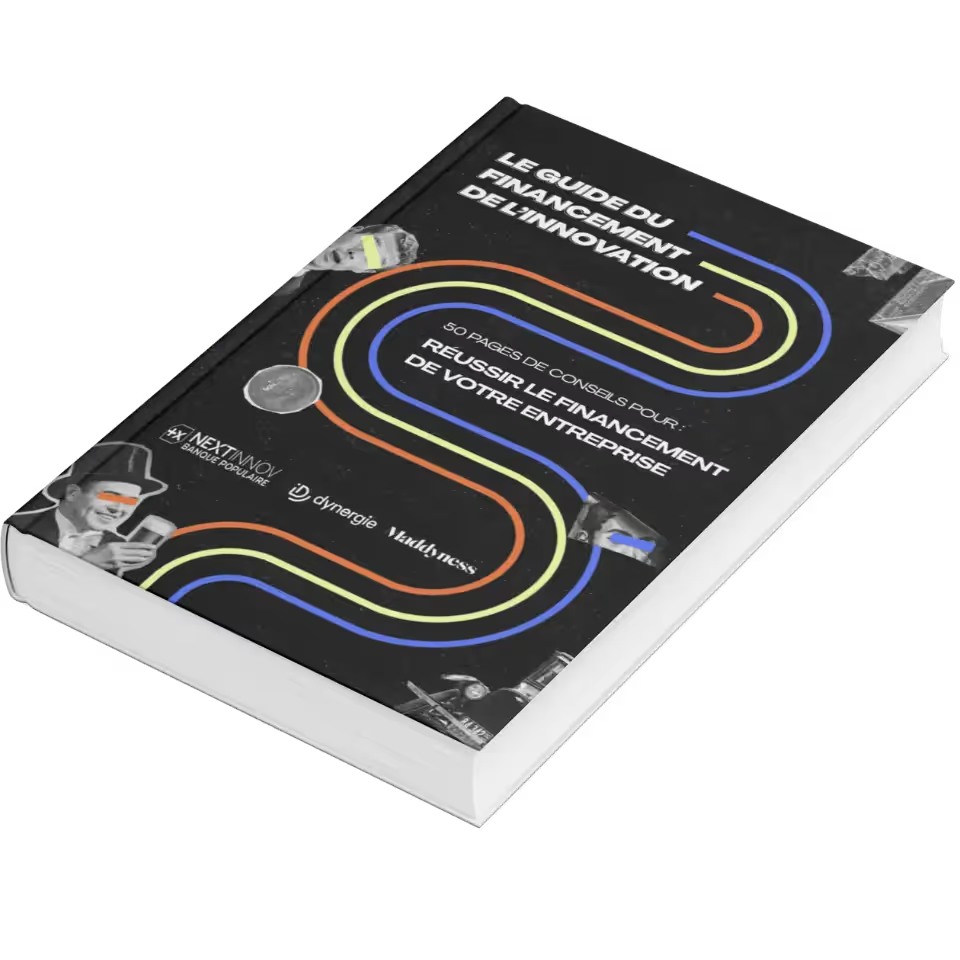
Discover our white paper, “How to Finance Innovation,” co-authored with Banque Populaire and MaddyNess as part of the “Course de Fond(s)” series. This guide features insights from key players in research and innovation financing. They break down the strategies, tools, and key players needed to finance your innovative projects, from the R&D phase through to commercialization.
What you'll learn in this white paper:
The ecosystem of research and innovation funding is complex, involving a wide range of stakeholders (both public and private) and a variety of mechanisms, all of which must be effectively integrated to develop a truly effective strategy.
Funding for innovative projects: a strategic challenge for businesses
R&D and innovation play a vital role, not only in business growth but also in overall economic development. In response to the transformation of key sectors such as energy, healthcare, and mobility, governments are allocating increasing resources to research and innovation.
In France, the flagship program, France 2030, is allocating 54 billion euros over five years. This ambitious initiative places France among the countries offering the most generous support to their innovative companies.
Tax credits, government grants and subsidies, bank loans? The main categories of financing
Innovation funding programs fall into four main categories:
- Tax incentives (Research Tax Credit, Innovation Tax Credit, Young Innovative Company status, etc.);
- Direct government grants (ADEME, Bpifrance, European Commission, etc.);
- Bank loans for innovation;
- Fundraising (business angels, investment funds, etc.).
The key challenge for a company engaged in R&D and innovation is to use these tools in a complementary manner to maximize their leverage. Tax incentives, for example, do more than just improve your cash flow; they also strengthen your equity, a key indicator for accessing other forms of financing, particularly bank financing.
Develop a solid financing strategy
One of the keys to success lies in establishing a clear strategy from the outset of an innovation or R&D project, by anticipating the various phases of the project and the different stages of funding. It is therefore crucial to begin by identifying the most relevant funding mechanisms based on the stage of development (feasibility, development, industrialization, commercialization) and the industry sector (deep tech, biotechnology, etc.).
The synergy between public, private, and bank financing can create a remarkable snowball effect: one euro of equity capital can generate up to three euros in additional financing.
Calls for proposals: how to choose the right ones and prepare for them
With more than 5,000 public funding programs available in France, choosing the right call for proposals (such as the I-Nov Competition, I-Lab Competition, I-Demo Competition, or Première Usine) is a crucial step. Funding experts recommend targeting the most relevant programs rather than applying to all of them.
The goal is not to create an innovation or R&D project simply to respond to a call for proposals, but to select the one that best aligns with the company’s objectives. Meticulous preparation is also essential, which involves consulting organizations such as Bpifrance or ADEME to pre-qualify the project and maximize its chances of success.
The Importance of Support: Consulting Firm or In-House Teams?
It is important to emphasize the importance of guidance when putting together a funding proposal. Whether through an external consulting firm or an internal resource, it is recommended that companies with more than ten employees assign a dedicated person to handle fundraising efforts. This support goes beyond simply applying for grants and extends to preparing pitches for investors, whether they are banks, investment funds, or business angels.
The Role of Banks in Financing Innovation
Banks play a major role in the financing ecosystem, particularly for innovation projects. However, bank financing for these projects presents specific challenges, mainly due to a lack of track record and limited visibility into financial projections.
In light of these challenges, banks focus on three key areas: the strength of the team, market potential, and competitive analysis. Intangible assets, such as patents or software, are not easily quantifiable collateral for banks. This is why a solid business plan and detailed cash flow projections are essential for securing bank financing.
To maximize financial leverage, ongoing communication with your banker is essential. It is recommended that you build a partnership by regularly updating them on the project’s progress. These frequent exchanges can open up additional financing opportunities.
The Importance of Equity and Cash
Finally, to attract the attention of investors and banks, the company must place a high priority on its cash flow and equity. The clearer its financial outlook, the easier it will be to raise funds or secure bank loans.
The example of Carbios perfectly illustrates the importance of this strategy. In July 2023, the company successfully raised €141 million. Bank financing, in conjunction with the fundraising efforts, played a decisive role in this remarkable success.
A long-distance race that requires careful preparation
Funding innovation is a true "marathon," requiring preparation, strategy, and support. The French ecosystem is brimming with opportunities, but companies must master the art of juggling various funding tools to maximize their success. Our white paper provides a detailed overview of available grants and programs, guiding entrepreneurs through this dynamic and competitive landscape.
In short, the key to success lies in companies’ ability to anticipate their financial needs, carefully select their challenges, and surround themselves with competent partners to structure and successfully carry out their innovative projects.
Related articles

Florence Caghassi Jouni

I’ve always been fascinated by the power of ecosystems. Thanks to a diverse career path that blends business relations, projects, and innovation, I’ve learned to surround myself with the right people and support my peers, with a single goal in mind: to add value to their lives. My belief? Working within ecosystems opens up new possibilities, fosters learning, and accelerates progress. Stepping out of your comfort zone, opening up to others, giving without expecting anything in return, and sharing without limits is, in my opinion, undoubtedly the best method for innovation and creativity in the world.