
Integration into the ecosystem: electric scooters
In light of the rise of electric scooters and the urban challenges they present, this article delves into the heart of contemporary mobility issues. Between their innovative potential and the need for an ecosystem-based approach, let’s explore together the paths toward sustainable and inclusive urban mobility.
A Story About an Electric Scooter
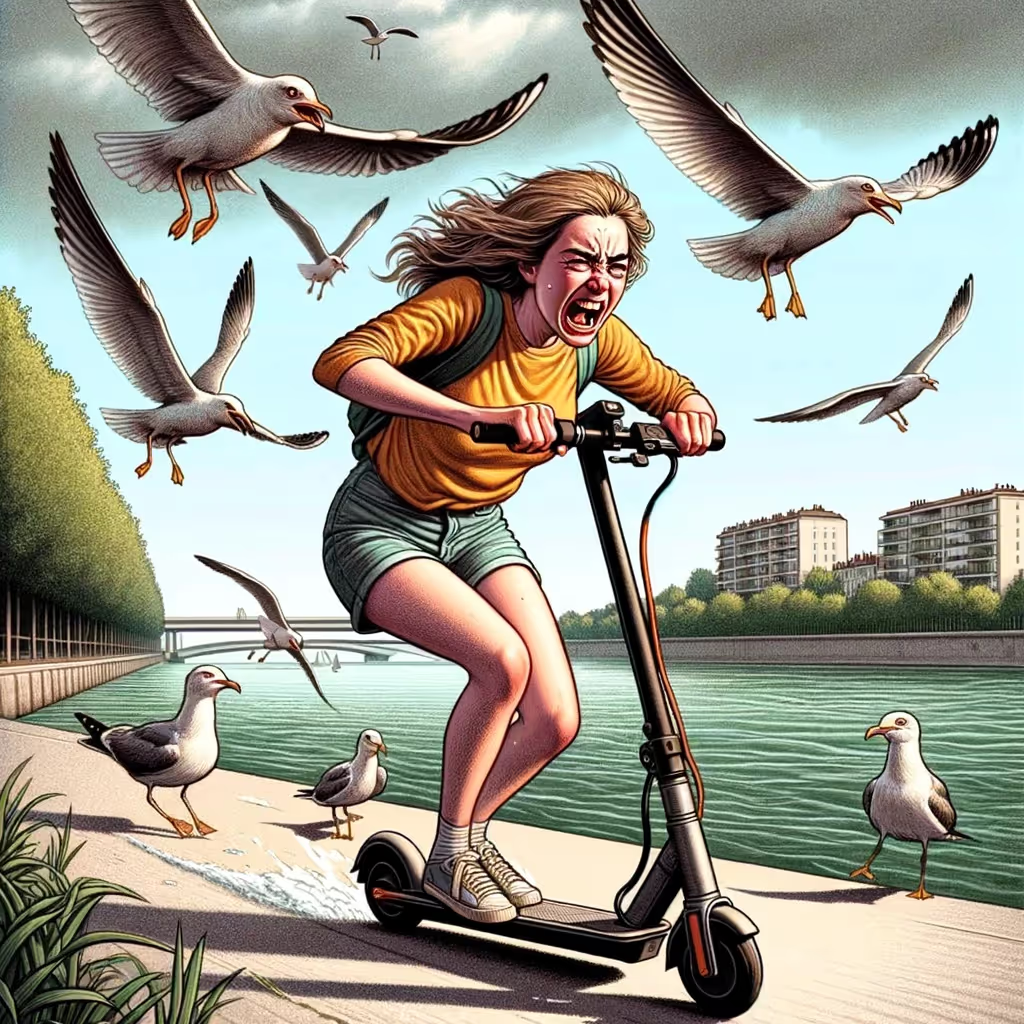
My first experience on an electric scooter was…memorable. Just picture it: me, clinging to the handlebars as if my life depended on it, so tense that I ended up with sore calves, riding so slowly that the seagulls along the Saône looked down on me. As soon as I was back on solid ground, I swore I’d never get on one of those things again.
The Untapped Potential of Self-Service Scooters
And yet, recent developments—the growing restrictions on free-floating scooters, and even their potential ban, as in Paris—sadden me. It saddens me because I see tremendous potential that may go unrealized. And because a wonderful scenario could have been possible if the business model for this service had been designed with a more ecosystem-oriented approach.
Advantages over traditional modes of transportation
At its core, the concept of shared electric scooters is making a real difference in urban transportation, particularly in terms of convenience:
- Compared to driving a car, the service helps users avoid traffic jams
- Compared to the bus or public transportation, it avoids the crowds that are common during rush hour
- Compared to cycling, it significantly reduces the physical effort required
And in any case, the free-floating system saves you the trouble of finding a parking spot or bike rack, or walking from the subway or bus stop to your destination
In short, what is known as the “impact”—the difference it makes for the “transported” user in terms of convenience—is significant and hard to dispute.
Impact on the ecosystem
But electric scooters don’t just affect the people riding them. There’s an entire ecosystem built around this concept, and part of it is being impacted by the scooters.
Inthe Impact Model developed by Dynergie, the ecosystem consists of all stakeholders who may be affected by the innovation, whether they chose to be or not. More specifically, if you can establish a causal link between an innovation and a consequence, you are a user of that innovation.
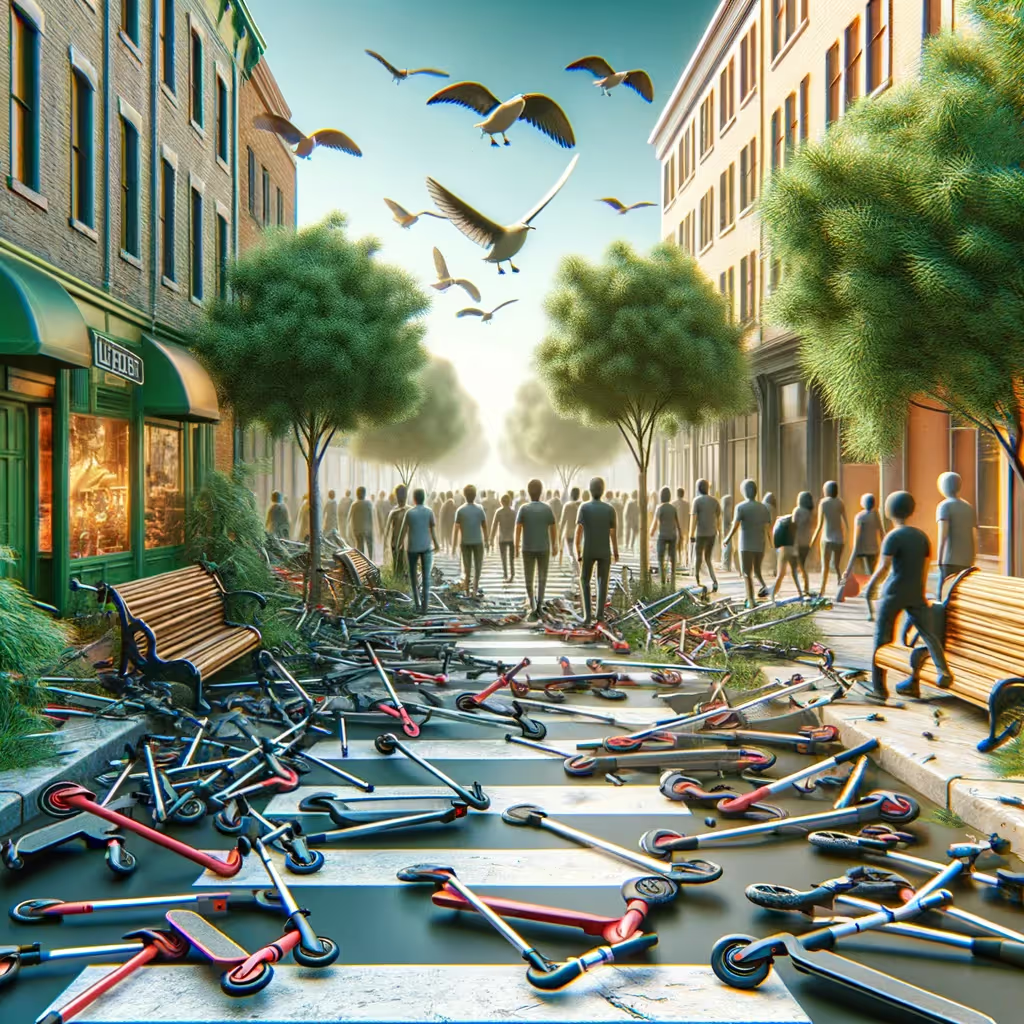
As a result, pedestrians who have to weave their way around scooters left abandoned on sidewalks—or even find themselves with sidewalks rendered unusable because of them—are users of scooters. Local elected officials who receive complaints from these dissatisfied pedestrians are users.
Regulatory Challenges and Their Impact on Innovation
And since scooter operators have failed to take this ecosystem into account, regulators have stepped in. Anne Hidalgo launched a referendum to ban the service. The city of Lyon has set up “parking areas” in certain districts for scooters, effectively rendering the free-floating concept obsolete. The city of Marseille issued an ultimatum to operators before taking more drastic measures.
The Importance of Ecosystem Design
The result is that the positive impact of this service is being significantly diminished. Whereas, if the entire ecosystem had been taken into account from the very conception of the innovation, and if the service had been designed in such a way that the benefits for each stakeholder in the ecosystem outweighed the costs (in both the financial and non-financial sense of the term, depending on the stakeholder), the heyday of the self-service electric scooter would be far from over.
Conclusion: The Future of Urban Mobility and Our Role
Whether you like the concept or not isn’t the point. Because even I, on that day, clinging to my scooter’s handlebars, hoping to arrive at my destination in one piece, cursing my colleague who had forced me to test this contraption of doom and was having a field day at my expense, found myself admiring the potential the concept held for a lasting change in urban mobility.
But when we have to create laws to restrict an innovation, it means the innovation was poorly designed. And that’s always a shame for everyone.
Fortunately for you and your innovations, here at Dynergie, we’re experts in ecosystem design, and we turn your innovation into a project that everyone has a stake in seeing succeed. Feel free to contact me if you’d like to learn more!
Related articles

Lea Bunnens

With one foot in research and the other in innovation projects, Léa’s main mission is to foster greater dialogue between these two worlds. On a daily basis, the projects she helps bring to life enable her to develop new methods and tools designed to increase the chances of success for future projects. Her specialty: identifying the right opportunity, developing the best possible idea, and devising the optimal business model for it.