
How can you test your market with a quantitative study?
This article provides a detailed look at how to conduct a quantitative study to assess the viability of your innovation project. You’ll learn about different data collection methods, the benefits of a quantitative approach, and concrete examples of strategies to adopt in B2B and B2C contexts. Whether you’re a startup or an established company, these tips will help you solidify your projects and maximize your chances of success.
Definitions
What does it mean to test the market?
When it comes to an innovative product or service, market testing involves validating the potential of your offering with customers.
This method is widely used in innovation because it allows companies to gather market feedback before launching the development phases, thereby safeguarding their projects and investments.
There are several types of market research, primarily qualitative and quantitative studies.
In most cases, these tests consist of marketing and sales experiments designed to identify the key components of a viable business model.
What is a quantitative study?
A quantitative study is an approach that uses methods designed to collect large amounts of numerical data on a target sample.
The goal is to measure and quantify events (views, clicks, reactions, comments, etc.) in order to identify causal relationships. With large data sets, this method makes it possible to generate generalizable results.
Data collection methods include, for example, questionnaires, surveys, and marketing and sales tests. But the most important factor is the ability to collect standardized data from large samples.
Quantitative or qualitative research: what are the differences?
When distinguishing between a quantitative study and a qualitative study, there are several key factors to consider.
As you can see, a quantitative study relies on the collection of numerical data and aims to quantify variables in order to obtain generalizable results. It focuses on measurement, evaluation, and statistical analysis. It is therefore particularly well-suited for assessing the extent of a phenomenon or for testing hypotheses.
In contrast, a qualitative study focuses on the underlying nature of phenomena without seeking to quantify them. It is a type of research based on observation, interpretation, and description, which provides detailed and nuanced insights into behaviors, opinions, or motivations. This type of study is used to understand the underlying nature of phenomena.
It should be noted that these two types of studies are not mutually exclusive, but often complement each other in a research context.

What is the advantage of a quantitative approach to market testing?
As mentioned earlier, a quantitative study is well-suited for testing hypotheses using large samples. This is precisely what we aim to do as part of a market validation test for an innovation project.
In fact, when a new service or product is created, it is necessary to answer many questions, such as:
- Does my innovation address a real need?
- Is there a market large enough to drive growth?
- What is the right price?
- What is the right value proposition?
- What are the key features to prioritize in the MVP (Minimum Viable Product)?
- What mistakes should you avoid?
Hypotheses are then formulated as potential answers to these questions. Conducting quantitative market tests then provides a large amount of data to validate or refute these hypotheses, thereby offering reliable guidance for the project’s development strategy.
Different types of methods or techniques depending on your goals
The methods or techniques you can use will depend largely on your targeting objectives.
In most B2B scenarios, your research will rely on lead generation channels such as email and LinkedIn. By using these techniques, your goals might include, for example, testing your sales pitch or conversion funnel, or distributing a survey to collect both quantitative and qualitative data.
In B2C, your approach will rely on advertising methods that drive traffic to a landing page featuring a contact form or a questionnaire.
B2B (Business-to-Business): refers to business models between companies, in which products or services are sold from one company to another.
B2C (Business to Consumer): refers to business models involving a company and individual consumers, in which products or services are sold directly to consumers.
You will thus notice the close connection between qualitative and quantitative research. Whether in B2B or B2C, you will generate conversions with people who are potentially ready to engage with you. You can then leverage these individuals for your qualitative research.
How can you test your market using quantitative research?
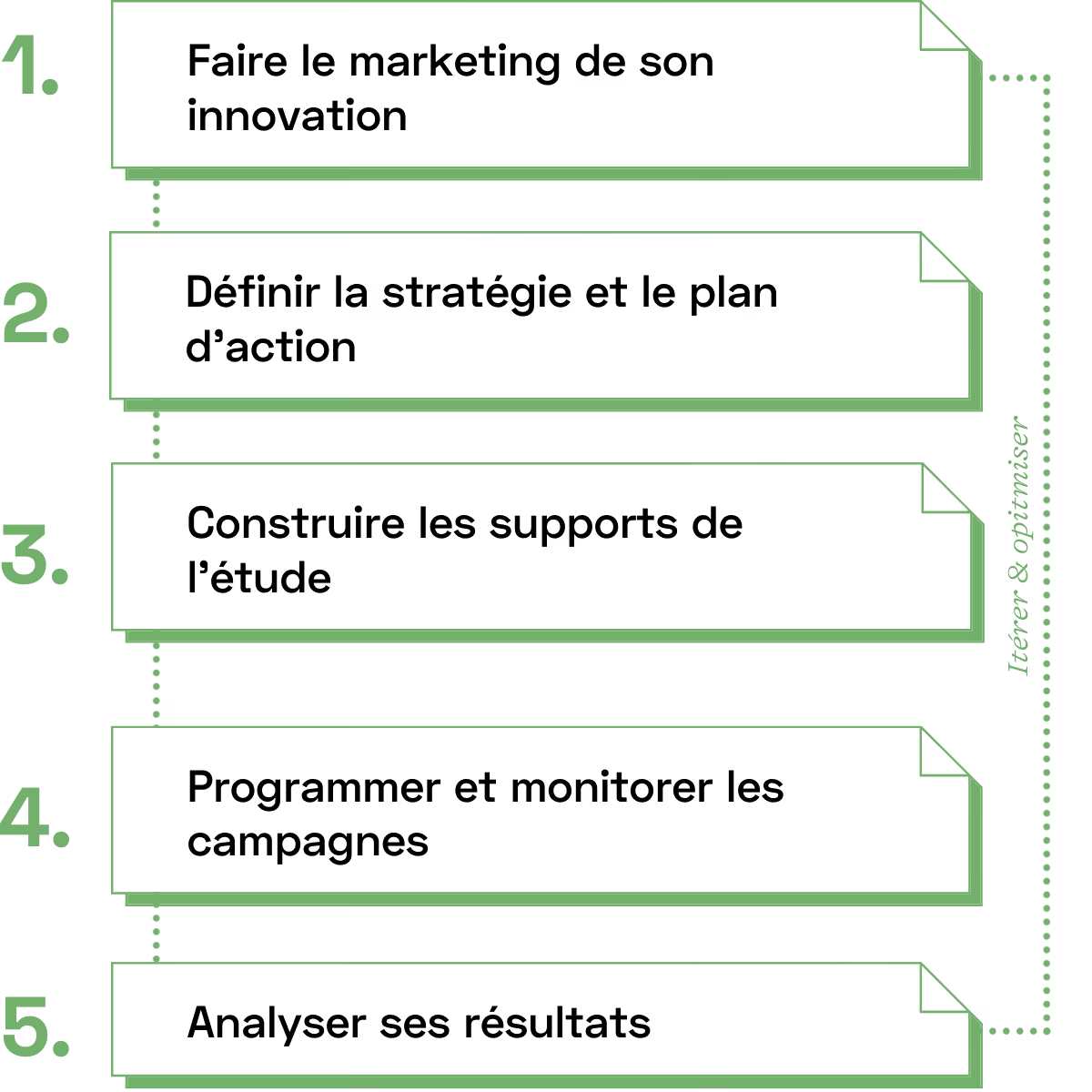
Marketing Your Innovation
First and foremost, testing a market requires having a clear and understandable proposition for your project. The first step, therefore, is to market your innovation.
As part of the testing process, this project aims to transform a project idea into a viable and attractive market offering by formulating hypotheses regarding the following elements:
- The Value Proposition
- Key features
- Key benefits
- Issues Resolved
- Other elements of the business model, such as pricing, customer segments, etc.
Marketing an innovation primarily focuses on refining the product or service, the value proposition canvas, and the business model canvas.
By "hypotheses, " we mean assumptions that may or may not be valid. It is therefore possible to formulate several hypotheses for a single element. For example, "For this target audience, my value proposition is either 'A' or 'B'."
To ensure your hypotheses are as accurate as possible, you also need to define validation criteria. For example, going back to the earlier example, our criterion would be: "The value proposition is 'A' if I get more than 100 conversions per 10,000 people reached."
Define the strategy and action plan
Defining these assumptions and criteria will help you identify what you want to test and make it easier to formulate your strategy and an action plan to validate them.
These two concepts are key and must consist of a logical sequence of experiments to be conducted, spread out over time in the form of iterations.
Focus on validating key assumptions during the initial iterations, and then on optimization during subsequent iterations.
Here is a list of the experiments available to you:
Split Testing or A/B Testing
A split test is an experiment in which traffic is split 50/50 between two identical versions that differ in only one aspect. The goal of this test is to determine which version performs better.
B2C: Launch two identical landing pages, but with different value propositions.
B2B: Send emails that showcase your innovation from different angles.
Trigger test
A trigger test is an experiment that involves creating numerous variations of an awareness-building piece (ads, emails, messages) to identify which elements spark the target audience’s interest. This data is then used to optimize the product or service and the way it is presented.
B2C: Post 3 ads showcasing your innovation from different angles
B2B: Sending emails with different subject lines
Multivariate test
This time, the ad creative comes in several variations. Sometimes, during a multivariate test, one of the ad creatives performs exceptionally well. To determine which variation(s) is responsible for this success, you must use a process of elimination until you identify the key variations.
This test allows you to test more elements more quickly to clearly define the core product or service. Once that is done, A/B or trigger tests can be conducted to optimize conversion factors.
B2C: Launch two landing pages with variations in the value proposition, benefits, pricing, etc.
B2B: Sending multiple emails with different subject lines and email bodies
These types of experiments are the most common. Other methods exist, such as the high hurdle test, smoke test, MVP test, and so on.
Sample B2B and B2C Testing Strategy and Action Plan
Chez Dynergie, nous avons l'habitude d'appliquer des stratégies et des plans d'action assez similaires entre eux, car nos clients souhaitent souvent valider des hypothèses très proches, sur par exemple, la proposition de valeur, les bénéfices clés, les bonnes cibles, les meilleurs canaux, le modèle économique, etc…
B2B
When reaching out to professionals, it’s often difficult to stand out among the many companies targeting the same prospects. It’s therefore essential to carefully choose the subject line and body of the email—or the LinkedIn message—you send.
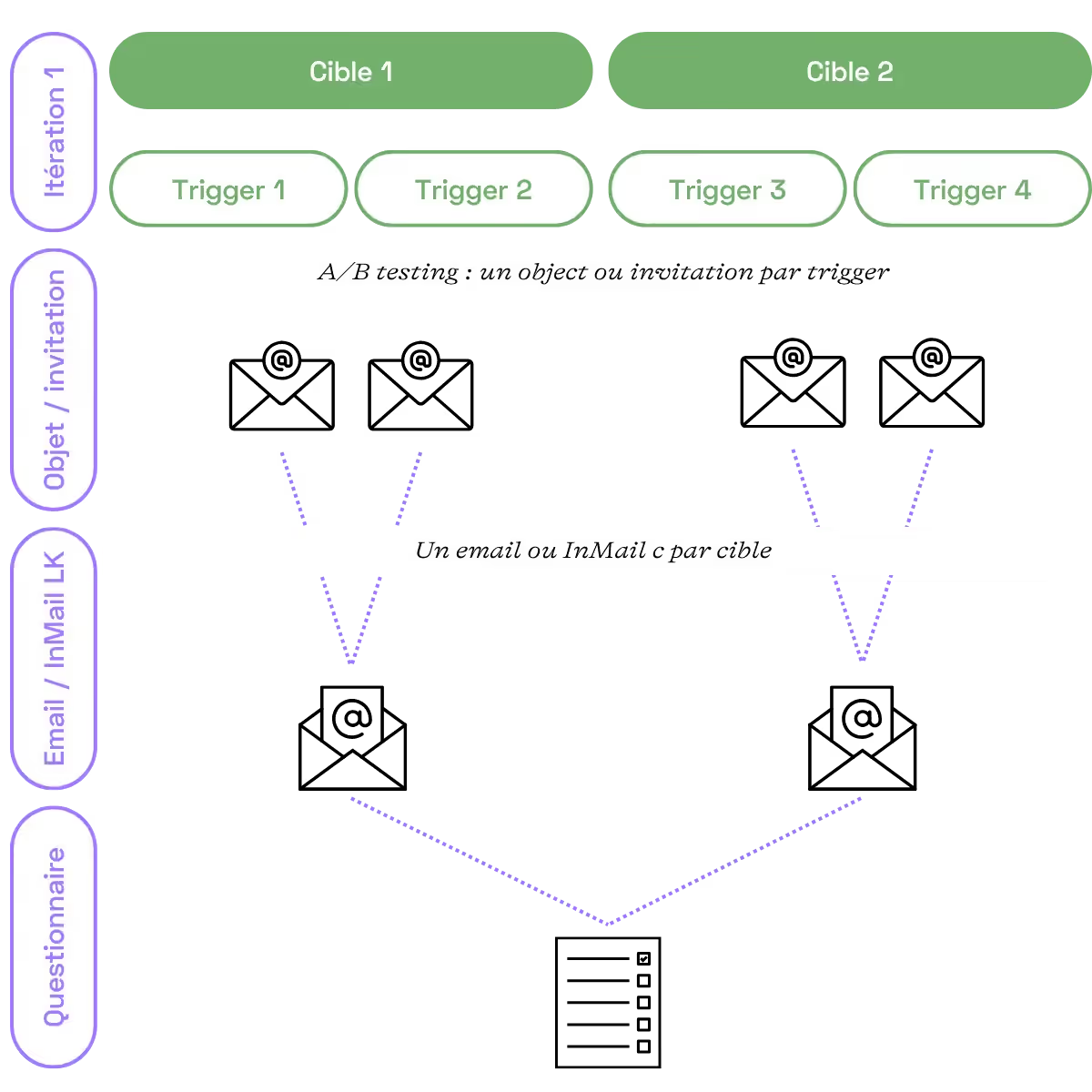
In the first iteration, focus on creating a campaign tailored to each target audience to personalize your messages, and conduct a“trigger test” on the subject line of your emails or invitations to identify the most effective way to spark interest.
Once your targets open your emails or LinkedIn invitations, you can conduct A/B testing in subsequent iterations of the email or LinkedIn messages to identify the most persuasive messaging.
Depending on your conversion goal, you can ask your target audience to engage in meaningful discussions or to complete a questionnaire—preferably a short one.
Mentioning a market study or an innovation in emails is generally an effective way to get responses—and, more importantly, “more positive” responses.
Here is an example of an action plan for the first iteration:
B2C
In B2C, the approach is generally different because it is fairly easy to reach the desired target audience.
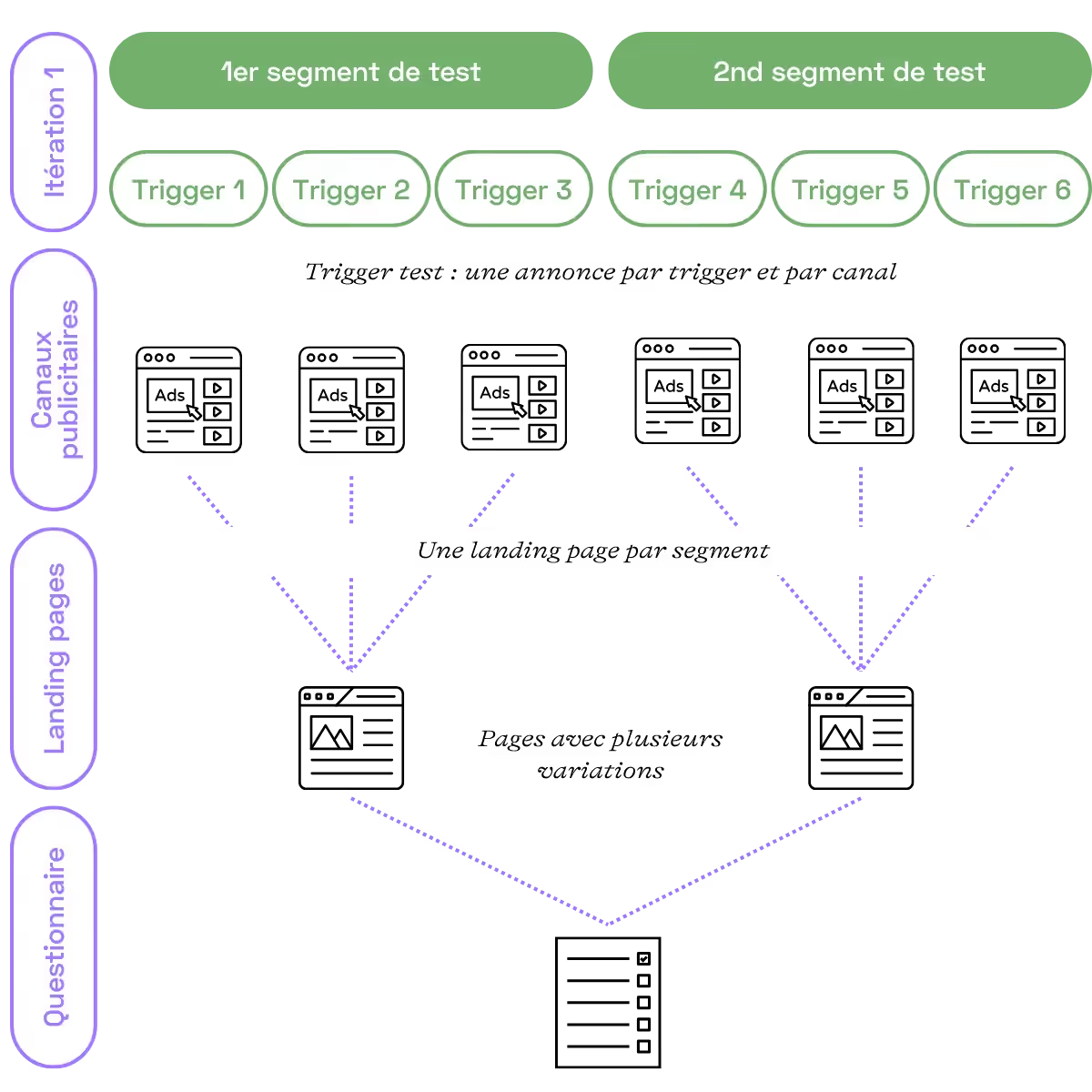
During the first two iterations, it’s best to conduct a “trigger test” with your ads (testing variations in features and key benefits) and a “multivariate test” with two landing pages (testing variations in value proposition, features, benefits, pricing, etc.).
The "trigger test" will help you identify the key elements that drive conversions for your solution, and the "multivariate test" will help you determine the most effective messaging. You can use as many channels as you like, such as Google Search, Google Display, Facebook, Instagram, and more.
In subsequent iterations, optimize your ad creatives by focusing on the ones that perform best, usingA/B testing to narrow down to a single ad and a single landing page.
Here is an example of an action plan for the first iteration:
Developing the study materials
If you operate in the B2B sector, create a database of professional contacts to reach out to your target audience (email, phone, LinkedIn). Also prepare your messages and design your survey to easily collect feedback, or your interview guide for high-quality potential conversations.
If your business model is B2C, you’ll also need to create your various ads, landing pages, and contact forms in line with the hypotheses you want to test.
Keep the KISS mantra (Keep It Simple, Stupid) in mind to quickly and easily create ads, emails, messages, surveys, or landing pages.
Schedule and monitor campaigns
Setting up campaigns isn't particularly complicated if you're familiar with the tools. If not, we recommend following tutorials or consulting experts. It's essential to be very careful to track all the data you want to analyze, either by using tracking tools like Google Analytics or by configuring your messaging tool correctly.
When campaigns are running, avoid making changes too frequently so that your data isn’t skewed. Above all, make sure you’re basing your analysis on sufficient data volumes and time periods.
Collecting the right quantitative data
To ensure that your study’s results are meaningful, collecting the right data is key.
It is therefore important that you do not get distracted by what are known as "vanity metrics. " These are statistics that appear impressive but do not reflect truly meaningful results.
For example, if I focus solely on the fact that a website had 1 million visitors, but not on the fact that only two customers converted out of that million visitors, then I risk deliberately ignoring factors that could be very problematic for my business.
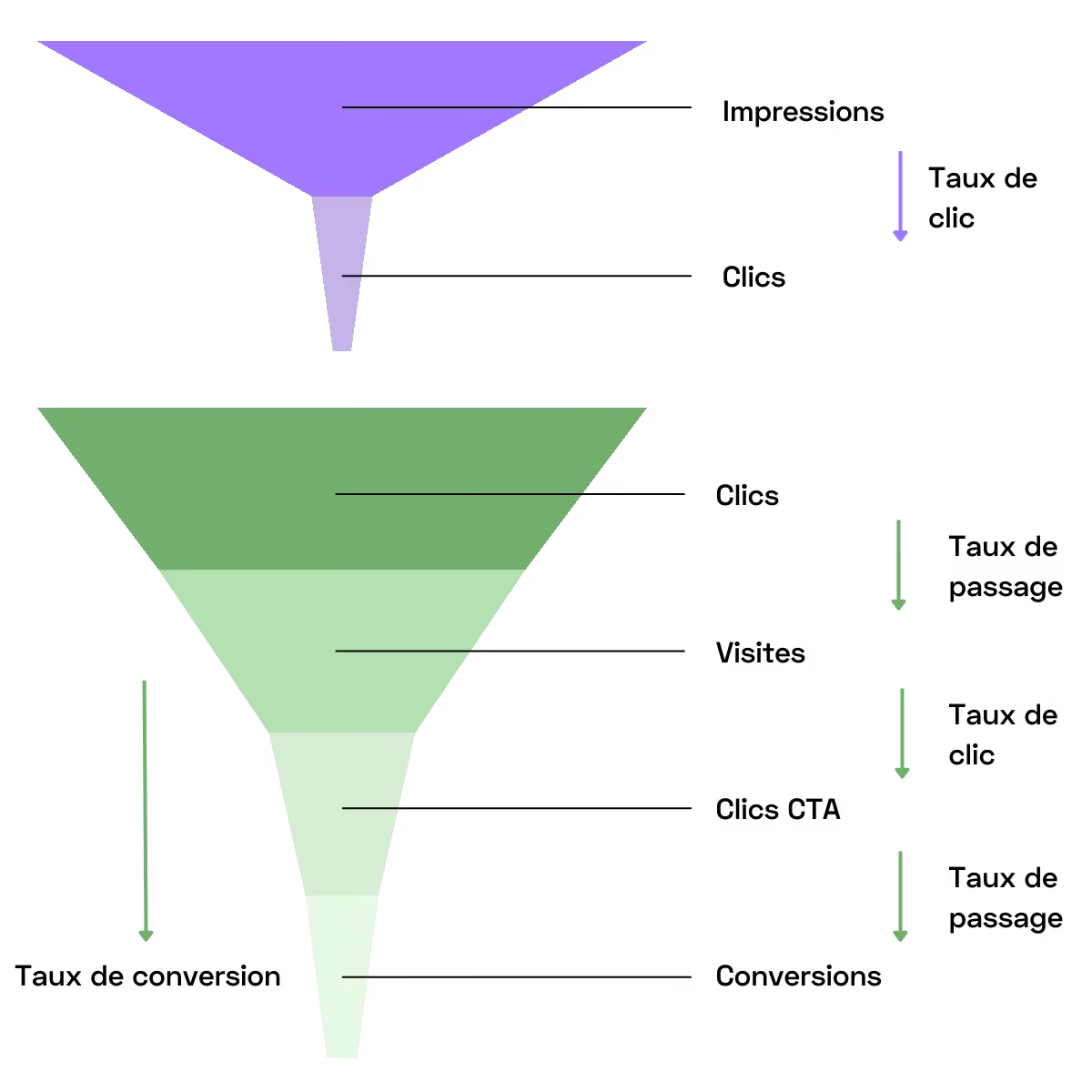
The same applies to quantitative market research. While sample size is important to ensure that results are based on sufficient data, it’s also essential to monitor the conversion rates and costs associated with each stage of my conversion funnel.
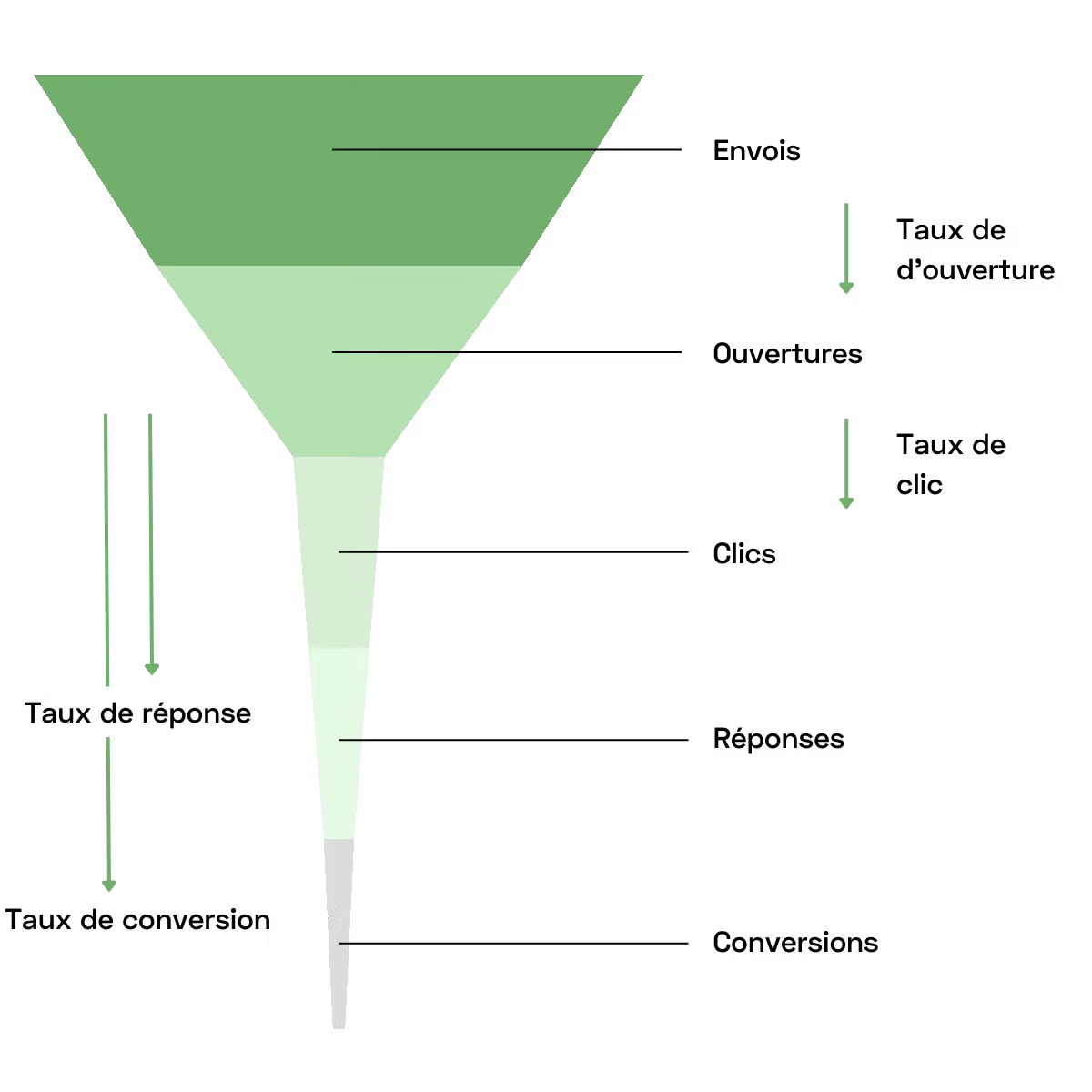
Here are the various metrics and KPIs to track:
In B2C
In B2B
How do you analyze your results?
When analyzing the results, it’s important to proceed step by step, focusing on the elements you wanted to test and the hypotheses you defined.
To simplify the analysis, we recommend using a data visualization tool such as Looker Studio, Power BI, or another similar tool.
1. Start by analyzing the results from the top of your funnel, such as your email open rates or the performance of your various ads. This initial analysis will help you determine whether your innovation and messaging are resonating with your target audience.
2. Next, analyze the results from the middle of your conversion funnel, such as the click-through rate for a link in your email or the behavior of visitors to your landing page. This second analysis will help you determine whether your messaging is effective and your offer is easy to understand.
3. Next, review the results from the bottom of your conversion funnel, focusing on the conversion rates of your web pages or emails. This final analysis will determine whether your target audience’s interest is confirmed and whether they are ready to make a purchase.
4. Once these three analyses have been completed, you will need to compare your results with industry benchmarks or results from previous iterations.
Your conclusions should be based not only on your various analyses, your market positioning, and the iterations, but also on the criteria used to validate your assumptions, so that you can make the best decision for the next steps in your project.
Pourquoi faire son étude quantitative avec Dynergie ?
Dynergie est un cabinet de conseil spécialisé dans les études de marché pour les projets d’innovation. Avec plus d’une centaine de tests de marché à leur actif au cours des 10 dernières années, nos experts maîtrisent tous les processus d’émergence ainsi que le déploiement marketing et commercial de tout type de projet. Ils seront en mesure de vous accompagner dans la réalisation de vos études de marché quantitatives pour valider le potentiel de votre projet d’innovation et de vous fournir des recommandations stratégiques pour simplifier son go-to-market.
Related articles

Nicolas Hily

After spending two years as an innovation consultant specializing in the implementation of strategies for bringing innovative solutions to market, I am now dedicated to driving Dynergie’s growth as the marketing and growth manager. Throughout my career, I have had the opportunity to experiment with numerous methods and principles drawn from real-world experience, my clients, my colleagues, and various sources of information. Today, I’m delighted to have the opportunity to share this expertise with you. I hope to share my vision of innovation and marketing through these various posts.