
Validating a market in an innovation process
With 17 years of experience in various innovation methodologies, we offer a guide to help you effectively validate your market through testing.
Understanding Market Testing in Innovation
A key role: validating the market for your project
Market testing is an essential step in the innovation process. It is the ultimate form of market research. Conducted after the concept has been developed and before full-scale deployment, it validates the market by assessing the appeal and/or commercial viability of a new product or service within a target market. It is a solution that answers many questions and involves commercial and marketing trials to determine the financial viability and market potential of an innovative product or service.
What kind of company needs to conduct this type of study?
Market testing, while typically associated with startups, is essential for any innovative company. Whether you’re a large corporation, an SME, a mid-sized company, an entrepreneur, or a B2B or B2C organization, market testing is a critical step in launching any innovative project—one that’s difficult to predict precisely because it’s so different from your usual business operations.
Why do it?
Is there market demand for my new product? What does that demand look like? How can I position it to meet that demand?
The primary goal of market testing is to validate market interest by determining the desirability and relevance of your offering. This process aims to establish "product-market fit," or the alignment between an offering and the market. These tests are crucial for predicting the potential success of your offering, while also providing valuable insights into how to achieve it.
In particular, they help to:
- Define target audiences: identify target personas (users, customers, partners, potential prospects) and the best strategies for reaching them.
- Identify your value proposition: determine what makes your value proposition unique.
- Developing pricing strategies: Finding the ideal balance between customer appeal and profitability is essential in an innovation project.
- Focus development efforts: ensure strategic alignment by identifying high-value-added benefits or features that meet the target audience’s expectations.
- Securing investments: clearly identify the market to justify development and investments. The cost of a market test is 100 to 1,000 times lower than the investment required for development. Validating your market early on prevents you from making a significant investment in developing a product or service that ultimately no one will be interested in.
- Accelerate time to market: Provide the insights needed for a successful launch.
What are the two types of market tests?
In recent years, Dynergie has conducted more than a hundred different market tests. Here are the two main categories:
Qualitative research
Qualitative market research involves surveying specific target groups through interviews or questionnaires. The goal is to gather qualitative data to gain insight into the profile of your future customers, their needs and expectations, as well as the target market, in order to develop an appealing offering.
Innovation revolves around engaging with current and future customers; it is essential to connect with them as early as possible.
Pre-commercialization simulations
These simulations are designed to mimic the launch of a product or service. They involve the use of various advertising channels and aim to conduct a quantitative study to collect data on the different stages of a sales funnel.
A sales funnel allows companies to visualize the customer's journey through to the purchase.
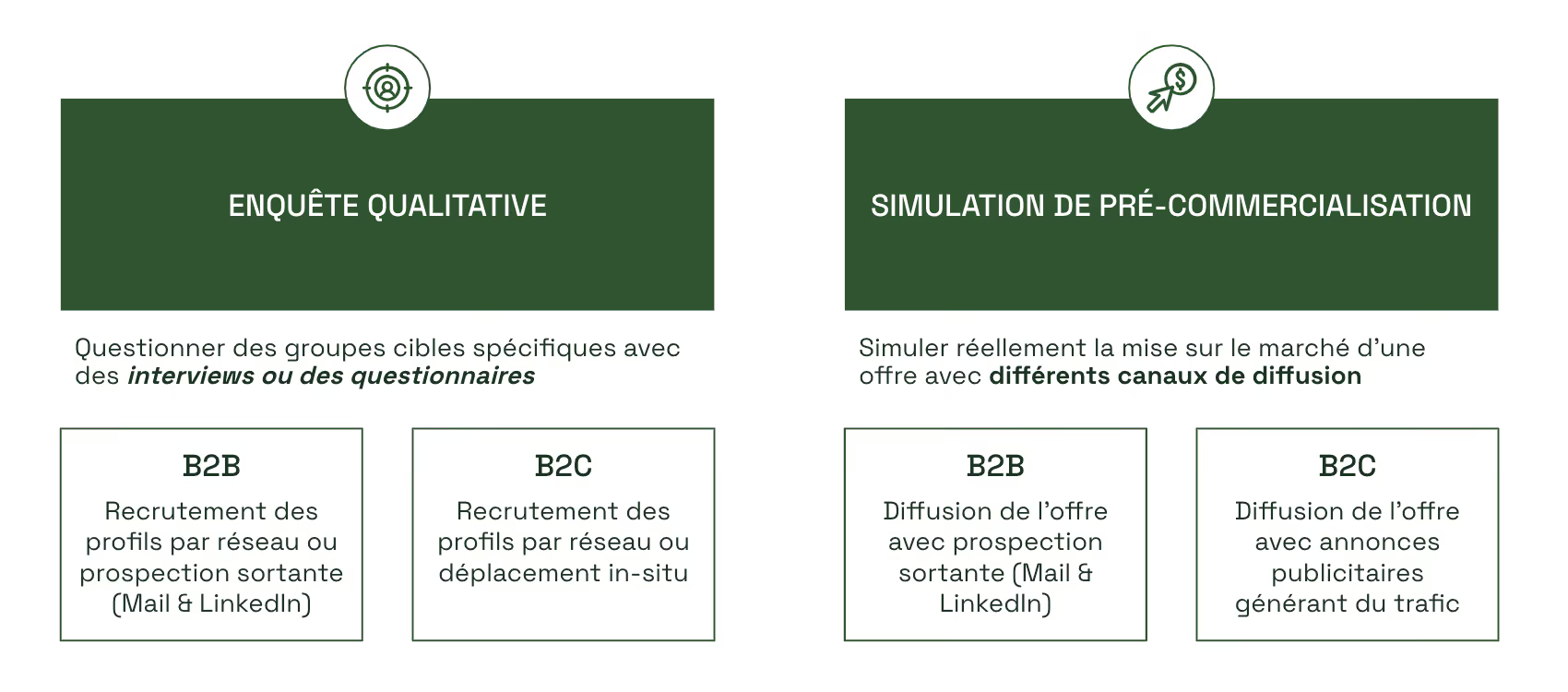
In practice, B2B qualitative surveys and B2B pre-launch simulations are similar; the only difference is the tone of the discussions (information gathering versus a sales pitch). B2C qualitative surveys, on the other hand, are often part of B2C pre-launch simulations.
What are the four steps involved in this type of market research?
Test preparation
Define all the elements needed to conduct the tests by: clarifying your concept to turn it into a presentable offering for your target audience, and defining a clear value proposition. Then develop a testing strategy (targeting, types of tests, channels), an action plan (iteration, budget, timeline), and hypotheses to validate.
Test Implementation
Create all the materials you need to implement your action plan: interview guides, outreach emails, advertisements, databases, surveys, and landing pages.
Conducting the tests
Implement your action plans to gather all the information needed to validate—or refute—your hypotheses. Take an iterative approach so you can make adjustments based on what you learn (value proposition, benefits, design of test materials).
A plan to be implemented iteratively
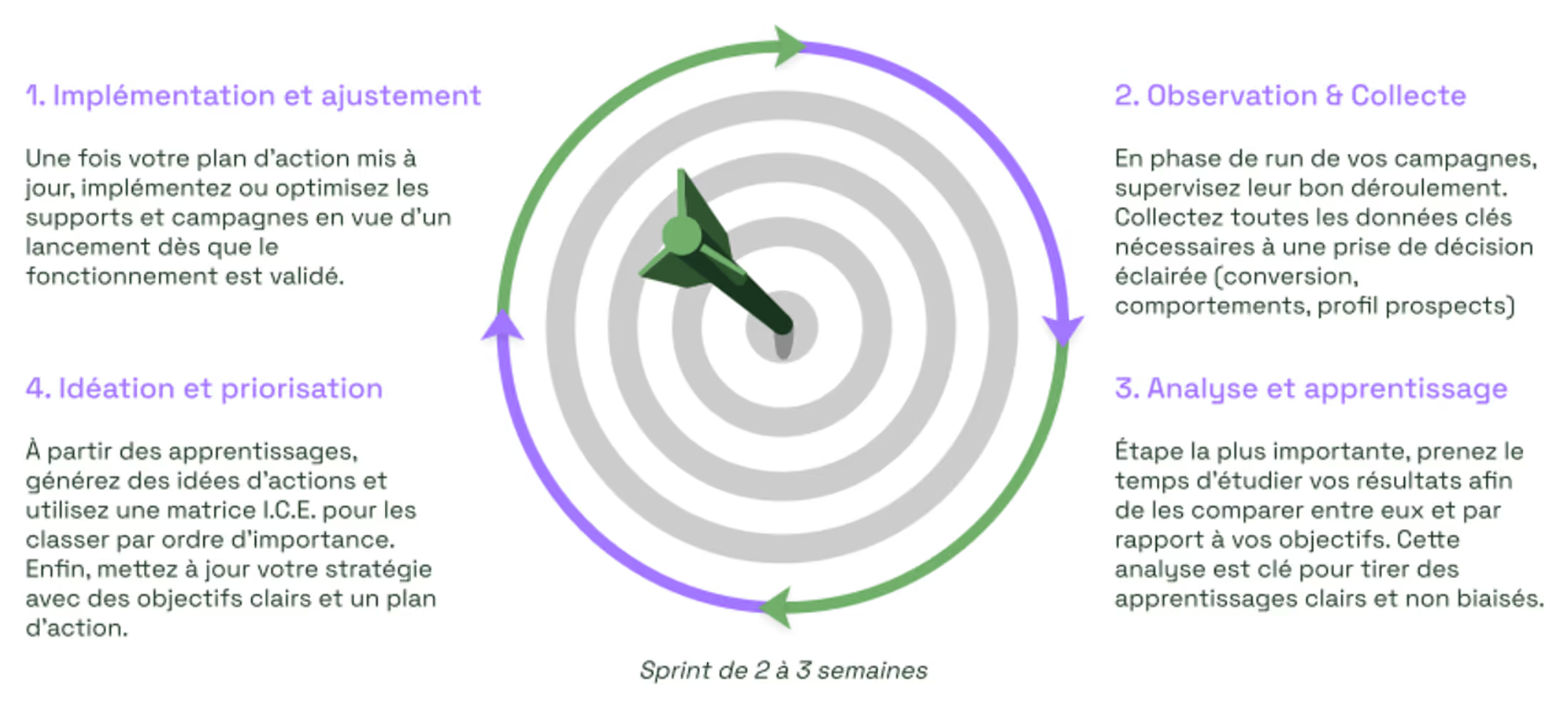
Analysis of the results obtained
Once you’ve collected all the data from your tests, take the time to analyze your results and draw the right conclusions, breaking down each hypothesis one by one. To do this, look for references to results from contexts similar to yours so you can interpret your results accurately.
Limitations of market tests
In practice, market tests are not foolproof. Their main weakness lies in the fact that the real test takes place when the innovative product or service is actually launched.
In addition, other sticking points can be identified, including:
- Limited representativeness: It is necessary to ensure statistical validity in order to obtain a comprehensive sample of results. Otherwise, this can lead to biased conclusions about market preferences and behaviors.
- Interpretation challenges: Analyzing market test data often requires expertise in statistics and consumer behavior. Misinterpreting the data can lead to incorrect strategic decisions.
- Rapid market changes: The market can evolve quickly, rendering test results obsolete. This is particularly true in fast-paced industries such as technology and fashion.
- Respondent and interviewer bias: Respondents may not be entirely honest or may answer in a way that pleases the interviewer, which can skew the results. In addition, the interviewer may manipulate the results to their own advantage.
Example: Michelin Inflatable Solutions
Michelin Inflatable Solutions, a subsidiary of Michelin, partnered with Dynergie to validate its market position in the events sector. By applying this methodology, Michelin Inflatable Solutions overhauled its business model and developed a deployment strategy for two new market segments. More than 40 qualified prospects responded to the survey, a large proportion of whom were ready to make a purchase.
See the Michelin customer case study
Conclusion
In a world of rapid and constant innovation, market testing is more essential than ever to ensure the success of an innovative product or service. It provides a deep understanding of market needs and expectations, enabling informed decisions about whether to proceed with a project before committing significant resources. However, care must be taken to conduct them seriously and carefully in order to derive maximum value from the results.
Dynergie can assist you with the conducting your market validation.
Related articles

Nicolas Hily

After spending two years as an innovation consultant specializing in the implementation of strategies for bringing innovative solutions to market, I am now dedicated to driving Dynergie’s growth as the marketing and growth manager. Throughout my career, I have had the opportunity to experiment with numerous methods and principles drawn from real-world experience, my clients, my colleagues, and various sources of information. Today, I’m delighted to have the opportunity to share this expertise with you. I hope to share my vision of innovation and marketing through these various posts.