
How do you fill out the Value Proposition Canvas?
In this article, you’ll learn how to use the Value Proposition Canvas at every stage to understand your customers, define your value proposition, and ensure that your offering aligns with your customers’ expectations.
Definition: What is Canva's value proposition?
The Value Proposition Canvas is a strategic tool developed by Alexander Osterwalder, Yves Pigneur, and Alan Smith. This tool helps define and align the value proposition of a company, product, or service with the actual needs and expectations of its customers.
This canvas is presented in the form of a matrix and consists of two main parts:
1. The customer profile, which describes your customers’ tasks (also known as “customer jobs”), the problems they face (known as “pains”), and their aspirations (or “gains”) within the target audience.
2. The value proposition map, which details your product or service offering, highlighting the features that solve problems (the "pain relievers") or create benefits (the "gain creators") for your customers.
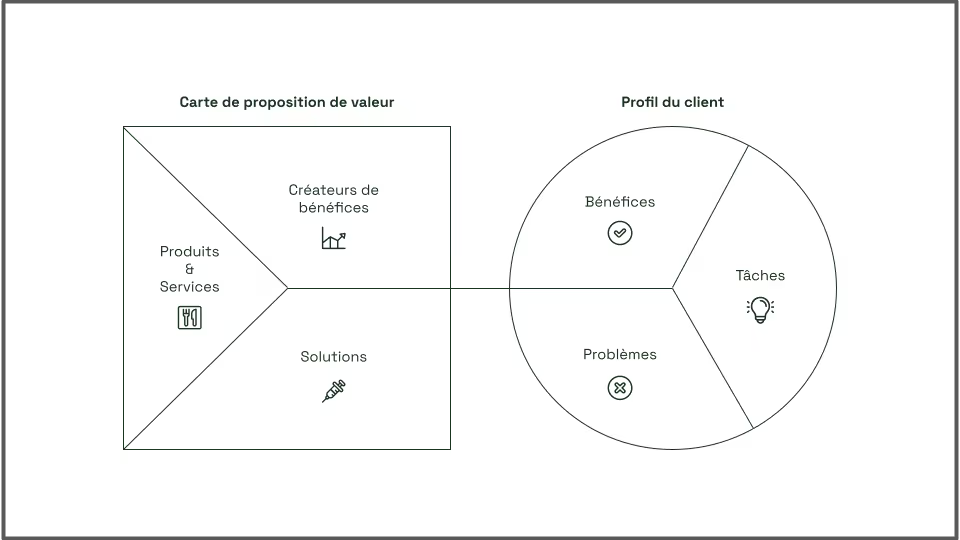
Goal: Design your value proposition using a single canvas
The purpose of the value proposition framework is therefore to guide you in:
1. Understanding the customer profile:
- Identify the tasks the client wants to accomplish.
- Identify the problems he is facing.
- Learn about the benefits it aims to achieve.
2. Define a value proposition map:
- Define your product and service offerings.
- Design revenue generators to deliver tangible or intangible benefits.
- Develop pain relievers to alleviate frustration.
3. Verify that the offer meets expectations: Ensure alignment between what you are offering and what the customer expects. This confirms that your offer effectively addresses the identified needs.
The Value Proposition Canvas provides a step-by-step guide to developing a viable value proposition using a single document.
What is the connection to the Canva business model?
The Business Model Canvas (BMC) provides a comprehensive overview of the business model for a product or service offering. The value proposition is a key component of this. As a result, the Value Proposition Canvas complements the BMC. These two tools should be used together to:
- Clarify the value you provide to your customers.
- Optimize your products and services to best meet the identified needs.
- Align your value proposition with the other components of your business model.
Explanation: How do I fill out my Canva value proposition?
We recommend clearly defining the value proposition and the customer profile.
When you use this framework, you likely already have an idea or a product/service in mind. Therefore, it makes more sense to start with the value proposition map, which lists and categorizes all the features of your products and services. Then, fill out the customer profiles for each target persona.
This approach will allow you, during the convergence phase, to assess your initial idea, product, or service in terms of its strengths and weaknesses so you can optimize it. You will also be able to identify your most suitable target personas.
In our view, these two elements are essential for successfully using Canva and creating a strong value proposition.
Define the value proposition map
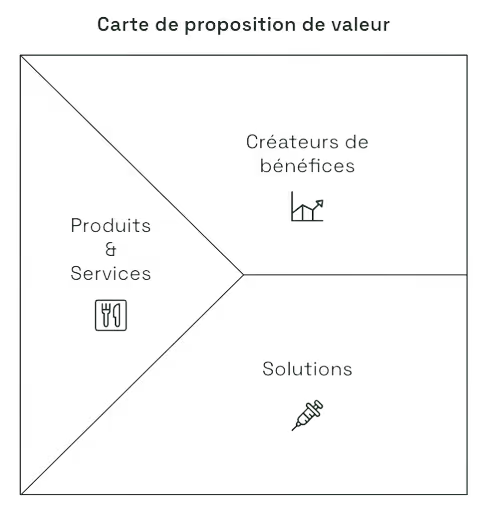
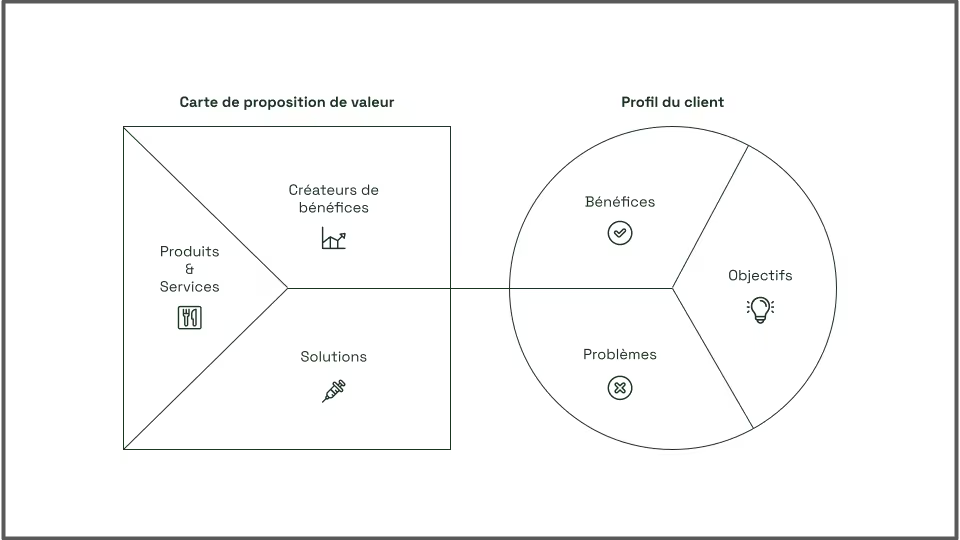
Products & Services
To start, list all the products or services you offer as part of your overall offering. This section allows you to clearly identify what you offer your customers/personas.
Profit Makers
Next, describe the features and characteristics of your products or services that can generate value. This section allows you to identify the aspects of your products or services that provide real benefits to their users.
Solutions
Finally, to complete the value proposition map, list the features and benefits that can address problems and frustrations. This will highlight how your offering can address the challenges your customers or personas may face, and how it can improve their experience or situation.
Define the customer profile
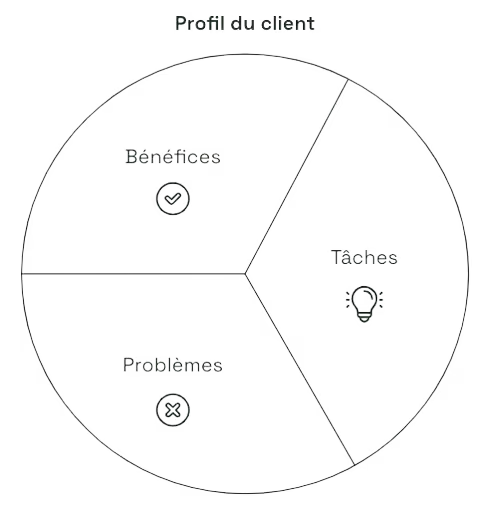
It is important to define a customer profile for each target persona you have identified. Avoid mixing these profiles. This will allow you to tailor your final value proposition and messaging to the specific audience you are addressing.
Tasks (or Jobs)
Always start by filling out the customer profile. The starting point is the tasks. These represent what customers are trying to accomplish in their personal or professional lives.
This may include:
- Specific tasks they are trying to accomplish,
- Problems they are trying to solve,
- Needs they are seeking to meet.
These factors may be emotional, functional, or social in nature.
Benefits
Next, list the benefits your target personas are looking for when performing their tasks. These benefits are the expected outcomes or advantages they hope to gain by using a product or service.
These may include elements such as simplicity,cost-effectiveness,functional utility, or positive emotions. To avoid skewing the canvas, don’t limit yourself to just the benefits your products or services provide.
Issues
Finally, as with benefits, it is necessary to identify the problems they may encounter. These problems arise when they attempt to perform their tasks or meet their needs. They represent the obstacles, constraints, or sources of dissatisfaction they face.
Convergence Check
Now that you have completed these various steps, it is time to verify alignment. This step is necessary to ensure that your offering meets your customers’ needs and expectations and provides them with real value.
Please note! It is entirely possible that your current offering does not fully meet your customers' expectations. In that case, you will need to consider developing a new product or service offering, or identifying new target customer segments.
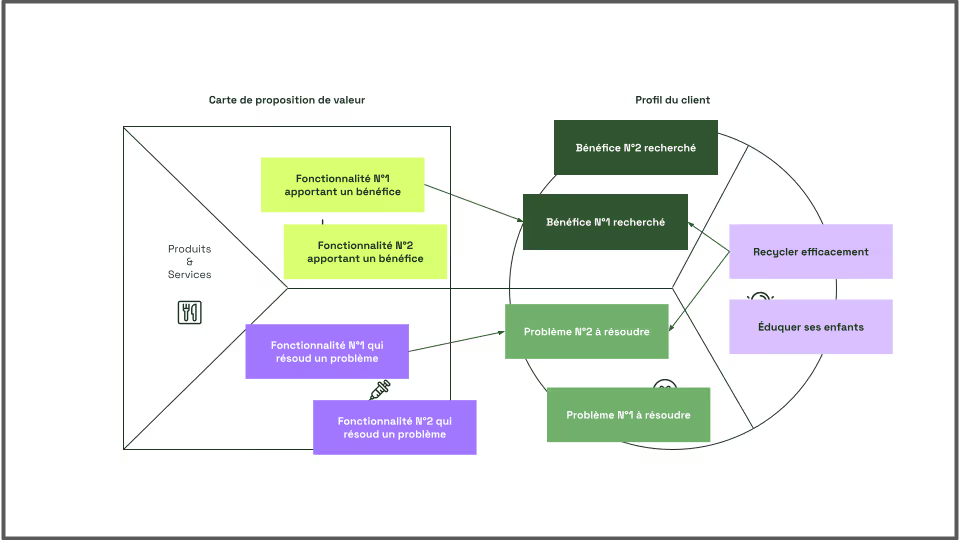
Solutions to problems
The first step in assessing alignment is to determine whether your products or services offer solutions to your customers’ most pressing problems.
Generation of significant profits
Next, assess whether your offering delivers significant value to your customers. This involves determining whether your products or services provide tangible or intangible benefits that effectively and persuasively meet your customers’ needs and desires.
Sample completed Canva value proposition
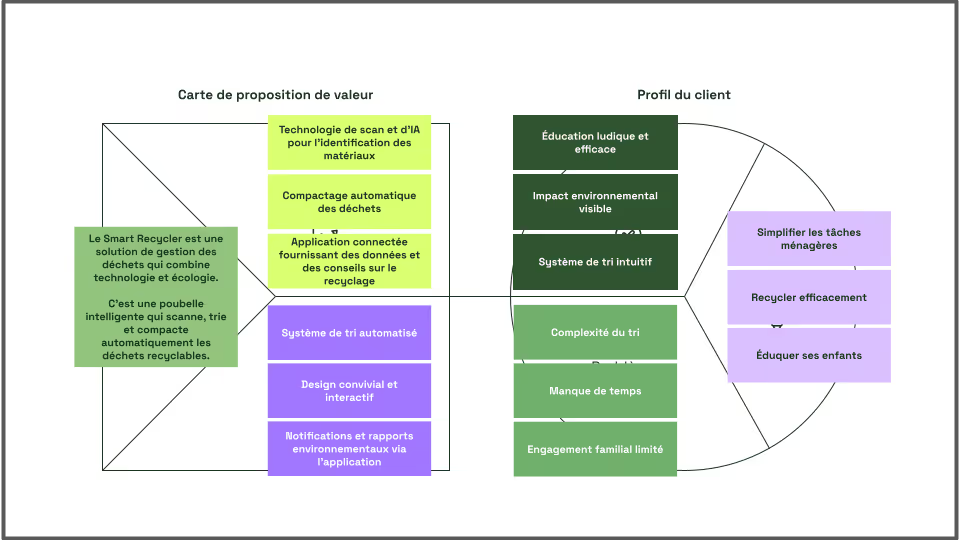
Here is a sample from Canva, completed for a fictional innovation project. We’ve named this project the Smart Recycler. It’s a smart recycling bin designed for families. It automatically scans, sorts, and compacts recyclable waste.
How should you present your value proposition?
To present your proposal in the best possible way, we recommend using the following template:
Our [solution name] solution helps [target persona] who want to [job] in [benefit or problem] and in [benefit or problem].
For example: Our Smart Recycler solution helps eco-conscious households that want to recycle effectively by simplifying the sorting process and teaching their children how to sort waste in a fun and effective way.
In this example, the key takeaway is simplicity and awareness. We can then make a promise: "With Smart Recycler, recycling becomes a breeze for the whole family."
To best articulate your value proposition and your promise, here are a few tips:
1. Clarity and Simplicity
Be clear and concise in your presentation. Use simple language and avoid technical jargon. Make sure your value proposition is easy for your audience to understand.
2. Highlight the benefits
Highlight the benefits your product or service provides to your customers. Explain how your offering meets their needs, solves their problems, or significantly improves their lives.
3. Be persuasive
Use persuasive arguments to convince your audience that your offering meets their expectations. Highlight the unique features of your product or service and explain why it stands out from the competition.
4. Adaptability
Tailor your presentation to your target audience. Identify your audience’s needs, concerns, and interests, and adjust your message accordingly to maximize the impact of your value proposition.
Blank French Canva value proposition template to fill out
Innovation Marketing & Value Proposition (Canva)
Chez Dynergie, cabinet expert en étude de marché, nous utilisons principalement value proposition canva dans le cadre d'études quantitatives ou qualitatives, afin de valider le marché d'un projet d'innovation. Le Value Proposition Canvas est alors essentiel pour le marketing de l'innovation. Grâce à cela, nos équipes peuvent définir une proposition de valeur claire et précise pour de nombreux projets d'innovation.
Related articles

Nicolas Hily

After spending two years as an innovation consultant specializing in the implementation of strategies for bringing innovative solutions to market, I am now dedicated to driving Dynergie’s growth as the marketing and growth manager. Throughout my career, I have had the opportunity to experiment with numerous methods and principles drawn from real-world experience, my clients, my colleagues, and various sources of information. Today, I’m delighted to have the opportunity to share this expertise with you. I hope to share my vision of innovation and marketing through these various posts.