
How do you market your innovation?
In this article, we will explore the concept of innovation marketing. We will break down the process into several key steps, explaining how to transform an innovation project concept into a viable and attractive offering in the marketplace.
Definition: What is innovation marketing?
According to Dynergie, innovation marketing is a sub-step in the innovation process that involves transforming the concept of an innovation project into a viable and attractive market offering so that it will be adopted. By “offering,” we mean:
- The Value Proposition
- Key features
- Key Benefits / Problems Solved
- The business model (customer segments, key partners, key activities, key resources, channels, customer relationships, revenue streams)
At what stage of the innovation process?
An innovation project consists of three stages. The first stage is the emergence phase. Regardless of the starting point—whether it’s an idea, an ambition, or a problem to be solved—the goal is to create a business concept that reflects the future product or service.
Once that’s done, we move on to the market validation phase, which involves marketing and sales experiments to assess the project’s viability in the market before investing too much, and thus decide whether to proceed or not.
Finally, the deployment phase is where investment, development, and market launch begin, including ongoing testing iterations. This phase is the longest and most complex.
Marketing the innovation takes place mainly during these last two stages. It is a process that is repeated several times and allows for continuous reevaluation of what has been done previously.
In preparation for market validation testing
We recommend that you begin marketing your innovation when preparing for market validation tests. Since the concept will be presented to the market—whether qualitatively or quantitatively—it is essential that it be presented in a polished manner with a well-structured proposal.
During deployment
Rollout is the marketing of continuous innovation. Once validation tests have been completed and the product is launched, qualitative and quantitative data are collected. Using this data allows you to constantly optimize your offering, thereby increasing its chances of adoption.
How do you define a value proposition for your innovation?
Here is an example to illustrate the method
Throughout this explanation of the process, we will use the example of a "Smart Recycler," a smart recycling bin for homes or offices that automatically scans, sorts, and compacts recyclable waste.
0 - The starting point: a concept
Please note that innovation marketing is not a stage in the innovation process where the concept is conceived. That should be reserved for the emergence stage, which yields a defined business concept comprising the following elements: the purpose or objective of the future product or service, a detailed description of the technology, a list of all its features, end users, and minimum pricing...
1 - Align the vision with the offering: the product and/or service
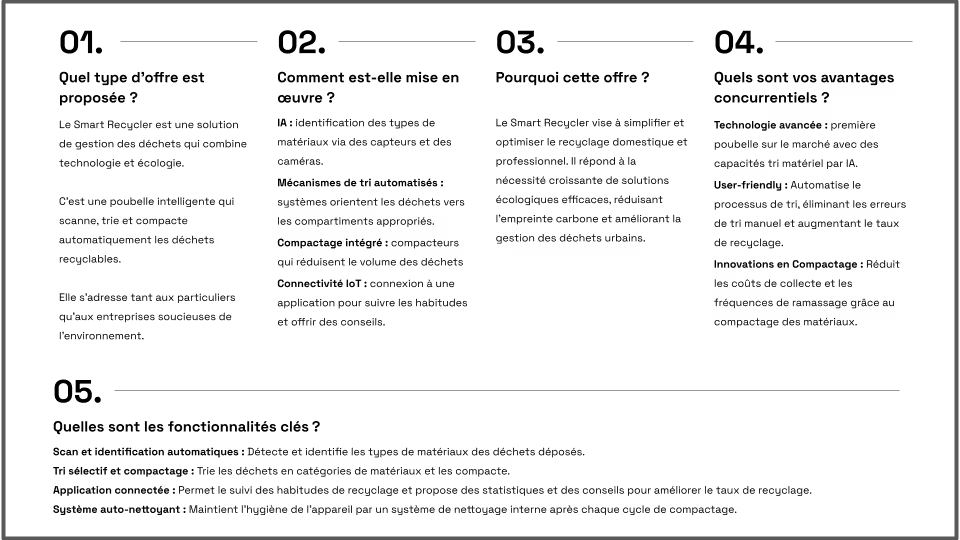
First, ask yourself these 5 questions:
1. What kind of service or product are you offering? Describe your offering briefly in a few words. It’s important to explain it in simple terms. Feel free to give your offering a name to make it more concrete and easier to talk about.
2. How is it implemented? Describe the methods, technological processes, social processes, etc., that the company uses to deliver the offering.
3. Why this offer? Describe its purpose—what does it address? What is its rationale?
4. What are your competitive advantages? Describe the competitive advantages that the product or company has in the market or compared to its competitors.
5. What are the key features? Describe the solution’s main features. What does the solution do?
Here is an example of how to align with an offer:
2 - Identify all the stakeholders in the ecosystem
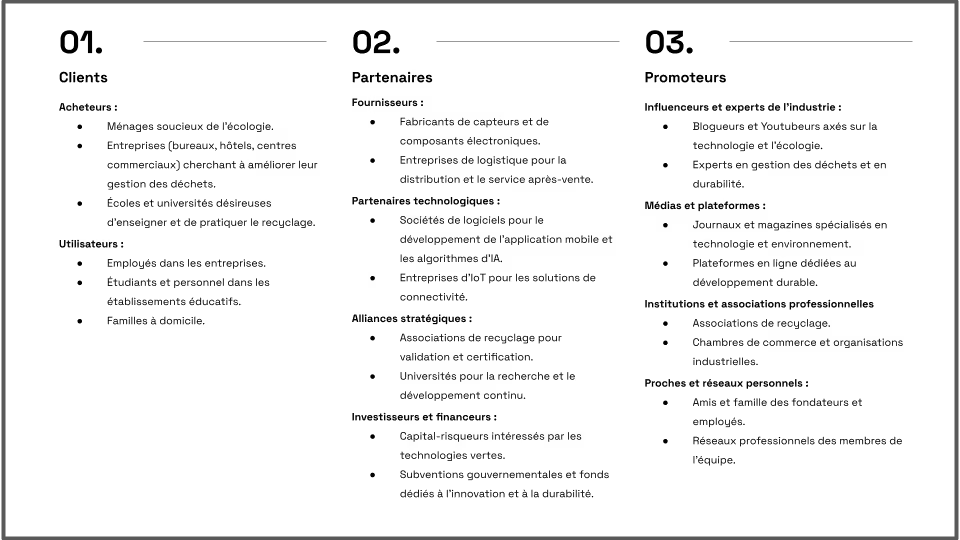
Once you’ve aligned your vision with your product or service, make a list of all the players in its ecosystem:
- Customers: buyers, users.
- Partners: suppliers, technology partners, strategic alliances, investors, and financial backers.
- Promoters: influencers, industry experts, media outlets and platforms, institutions, professional associations, and friends and family.
- Competitors: direct, indirect.
- Regulatory agencies or government entities: cities, regions, and state governments.
Here is an example of a definition of all the components of an ecosystem:
3 - Define the target personas
Once you have established your ecosystem, you need to identify the primary target audiences for whom you want to market your offering. It goes without saying that your future users or customers should be your focus, but promoters or partners may also be relevant.
To select these target stakeholders, we recommend using an ICE matrix (Impact-Consistency-Ease):
- Impact: What impact would it have on the development of your innovation or your business if you were able to convince this persona?
- Consistency: To what extent does the choice of this persona align with your overall strategy?
- Ease: How easy is it to reach this persona?
Next, for each criterion, assign a score from 0 to 5, then add up the scores, and finally prioritize 2 to 3 key target players.
For each one, you need to define a persona.
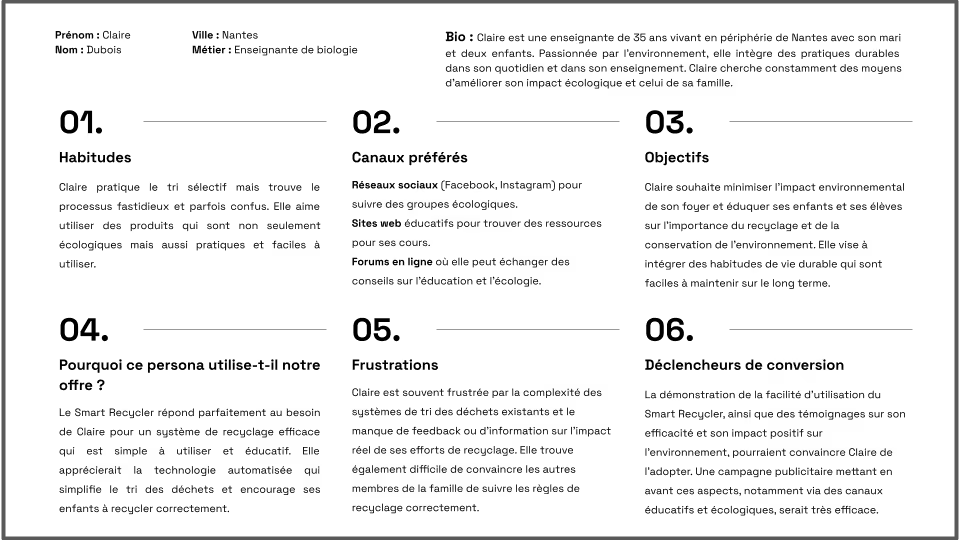
A persona is a detailed, semi-fictional description of a person, including demographic details, behaviors, needs, motivations, expectations, and other relevant characteristics.
To define a persona, you need to collect data through interviews with the target audience, conducted as part ofqualitative research and guided by an interview guide.
Here is an example of a persona:
4 - Define the personas' Jobs-to-Be-Done
In our view, the next step is one of the most important, as it helps identify the triggers that will lead a target persona to use your innovative product or service.
So, for each target audience you’ve prioritized and for which you’ve defined a persona, try to identify the following:
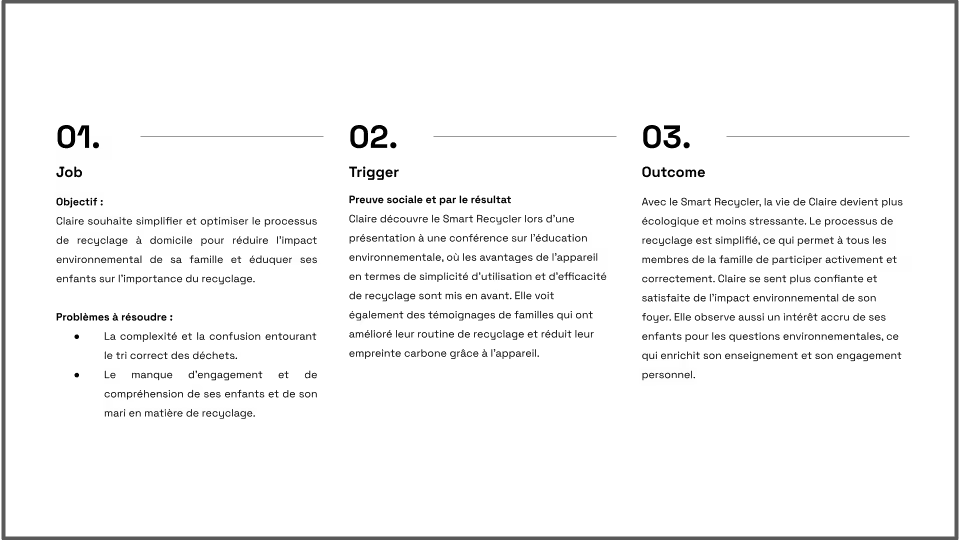
1. Job: What is the persona’s goal? What problems does he or she want to solve?
2. Trigger: What is the trigger that motivates him to solve the problem or achieve the goal?
3. Outcome: What will his life look like once he has resolved his problems or achieved his goal?
When a situation arises (Job), I need motivation (Trigger) so that I can achieve the desired result (Outcome).
Here is an example of a JobToBeDone:
5 - Fill out the value proposition canvas
Now that your JobsToBeDone are clearly defined, it’s time to work on the Value Proposition Canvas.
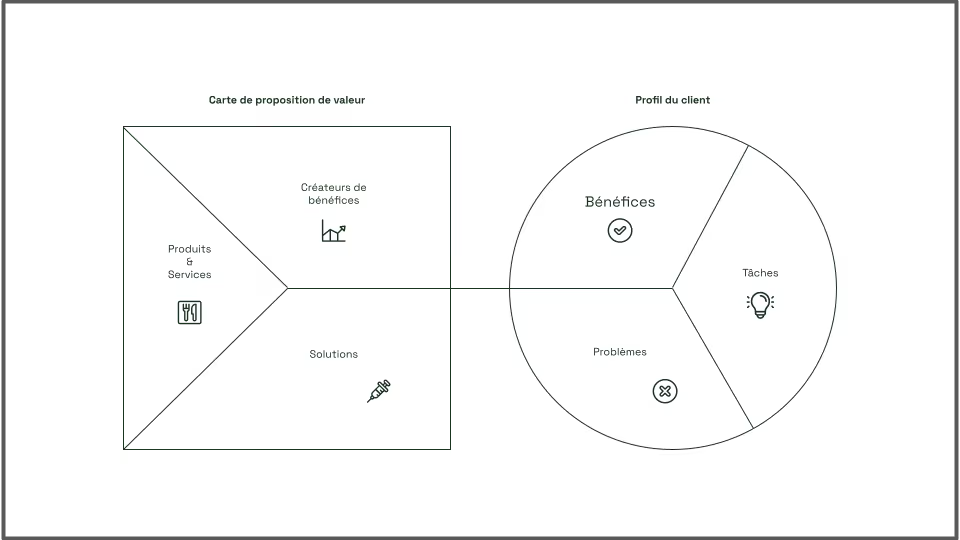
1. Start by filling out the section titled "Value Proposition Map." To do this, use the information from the first step. Place your answer to "What type of offering is being proposed?" in "Products and Services," then enter the features of your innovative product/service in "Benefit Creator" or "Solution." These features can either create a benefit or provide a solution to a problem. If they meet both criteria, you can place them in both sections.
2. Next, for each persona, fill out the "Customer Profile" section without considering your innovative product or service. Separate the two and build on the personas you defined earlier.
- Tasks (= Job—yes, reuse your JobsToBeDone): What are the main activities the customer needs to perform on a regular basis? What are the specific goals or problems the customer is trying to solve? In what context or situation does the customer perform these tasks?
- Benefits: What are the main obstacles or frustrations the customer encounters when trying to complete their tasks? What are the negative consequences or risks if these tasks are not performed correctly? Are there aspects of the current solution that the customer finds ineffective or unsatisfactory?
- Challenges: What are the main benefits the customer hopes to gain by completing their tasks? What features or functionalities would the customer value most in a solution? How does the customer measure success or satisfaction in completing their tasks?
It’s normal for aspirations, benefits, and problems to overlap and reflect one another. So don’t worry if that happens to you.
Here is an example of a completed Value Proposition Canvas:

6 - Identify all possible value propositions
Alignment occurs when your value proposition matches your customer profile, particularly when your products or services solve major problems for your customers or offer significant benefits.
The value proposition canvas helps you explain how you plan to create value for your customers. When both sides align, you succeed in creating value.
For each persona:
- Identify which "profit-generating" features align with the desired benefits
- Identify which "Solutions" features address the issues
- Identify which desired benefits or solutions address a specific need.
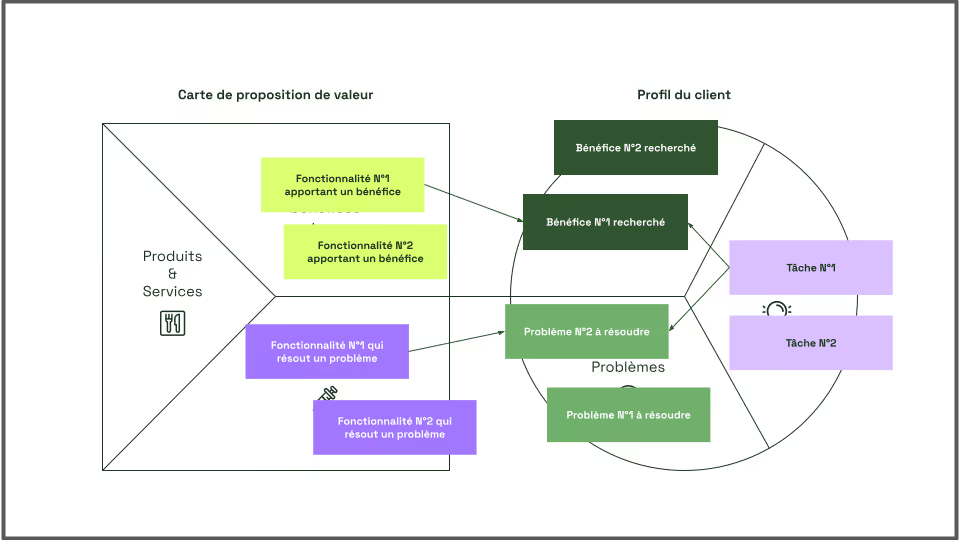
Your innovative product or service may not have features that match the customer profile. If that’s the case, your offering may not be relevant. In that case, you should either revise the features or discard that persona.
For each area of overlap you identify, formulate your value propositions for your different personas using the following format:
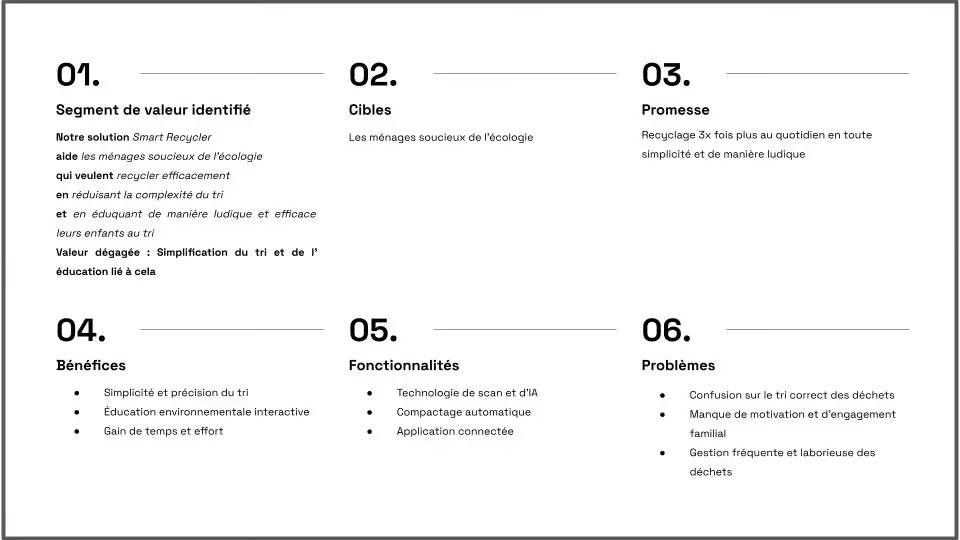
Our [solution name] solution helps [target persona] who want to [job] in [benefit or problem] and in [benefit or problem].
Here is an example of a value proposition:
Our Smart Recycler solution helps eco-conscious households that want to recycle effectively by simplifying the sorting process and teaching their children how to sort waste in a fun and effective way.
Value delivered: Simplification & awareness
7 - Draft the proposal
Finally, you can prioritize a key value proposition for each persona based on what you believe to be the most effective.
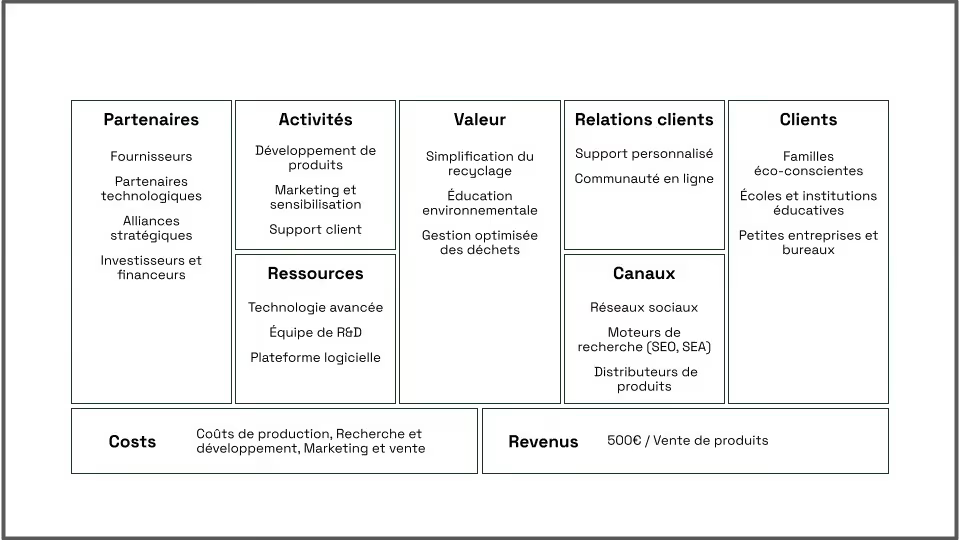
By completing this work—which lays the foundation for your marketing strategy for your innovation—you’ll have a map of your ecosystem, personas, and a value proposition. In short, you’ll have the key components of a business model:
- The Value Proposition
- Customer segments
- Key partners
- The canals
As for the other components—key activities, key resources, customer relationships, and revenue streams—you should be able to identify them by working through a business model canvas.
Sample marketing summary of the offer (very useful for creating a landing page, in our experience)
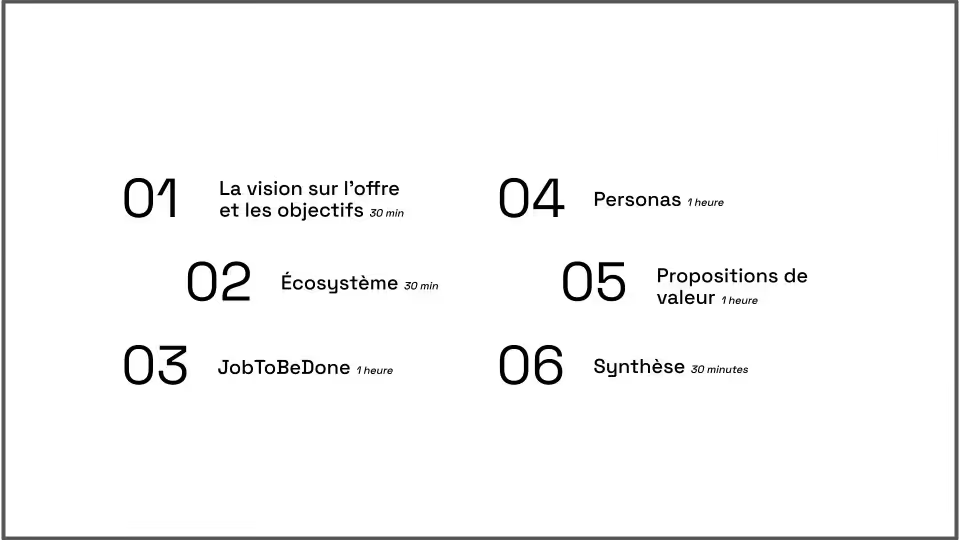
Plan for Conducting a Marketing Workshop
Here is a workshop plan that we usually use internally:
Dynergie, an innovation consulting firm, supports you in marketing your innovations
Dynergie specializes in innovation projects. We can assist you in implementing marketing strategies, as well as with all the steps leading up to and following their implementation. If you’d like to learn more, please feel free to contact us through our contact page.
Related articles

Nicolas Hily

After spending two years as an innovation consultant specializing in the implementation of strategies for bringing innovative solutions to market, I am now dedicated to driving Dynergie’s growth as the marketing and growth manager. Throughout my career, I have had the opportunity to experiment with numerous methods and principles drawn from real-world experience, my clients, my colleagues, and various sources of information. Today, I’m delighted to have the opportunity to share this expertise with you. I hope to share my vision of innovation and marketing through these various posts.